
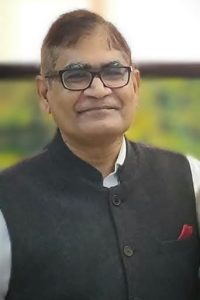
 Professor Satya Narayan Misra in Bhubaneswar, May 10, 2026: The recent election results in Bengal and Tamil Nadu have belied the forecast of practically all pundits and psychologists like Pranoy Roy who was crisscrossing a cross section of Bengal with his outstretched mike and mobile. Kerala seemed destined for a change, with a competent and ageing Chief Minister, with Christians and Muslims miffed with some of the policies of the Left wing. Some have even pronounced the death of left ideology in India, with first Tripura, then Bengal and now Kerala not enjoying popular traction and cadre based depth.
Such an elegy for the left may be premature, but the churn in Tamil Nadu where there was no ant incumbency simmer against Stalin, and such a huge backlash against Mamta Banerjee has been rather unprecedented. The only close parallel is Odisha, where a competent regime of Naveen Patnaik was trounced by the BJP juggernaut in 2024 elections. Beyond the immeasurable reasons, a dispassionate look at how these states have performed against various development parameters will throw some light on the ongoing debate.
The Development Trends
The report of the Niti Ayog, based on survey made by NFHS V (2019-21), bring out the following trends in respect of these three states. They are broadly represented as multi-dimensional poverty, as per the SDG, which look at education, health and living standard as better indicators of the innards of poverty, rather than the facile reference to poverty line.
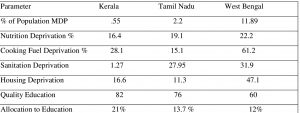
Quite clearly Bengal under Mamata’s 15-year rule has performed poorly in terms of quality of education & budget priority for the sector. In particularly the deprivation percentage in terms of cooking fuel, housing, nutrition and sanitation are rather alarming. The anaemia % among women has gone up from 62.2% in 2015-16 to 70.8% (2021) under Didi’s watch. Except for providing direct cash transfer to women @1000-1200 per month under the Lakhmir Bhandar Scheme, effective supply chain distribution of protein supplements, iron and folic acid through the Anganwadi appear to be very weak in West Bengal.
Kerala is a shining totem of human development, with multi-dimensional poverty % minimal, with a high score on education, allocation to education, sanitation, while its record on providing cooking fuel, housing, and nutrition is not too edifying. The capability approach of Sen has found its fruition substantially in Kerala. Congress with its welfare leanings and socialistic moorings is likely to continue the good work done by Vijayan for a decade under the LDF.
Tamil Nadu is an interesting state which combines the free market model of Bhagawati with freebies as the leitmotif of its popular appeal among common men and women. It found an unexpected ally in the Supreme Court when in the Balaji Case (2013) it considered distribution of goods serving a public purpose and in consonance with the mandate to the state to ‘promote distributive justice’.
Tamil Nadu has an edifying record as manufacturing hub for automobiles, as also deprivation parameters. Stalin’s loss at the best be explained by Tamilian’s predilection for film stars like MGR, who kick-started the Mid-Day Meal scheme which had a tectonic spread effect through the country. Efficiency & Welfare have been bed mates in Tamil Nadu, while Bengal has tripped in the efficiency scale. Kerala remains the outlier quite like a Scandinavian country, high on human rights and capability and low mindless pursuit of wealth.
The Frailty of Econometric Modelling
 It was Galbraith who had wittily observed: The only job of economic forecasting is to make astrology look respectable. The futility of our election analysts like veteran Pronoy Roy had predicted a 10% advantage for Mamta over Modi. Quite clearly this prediction has been upended. Whether it has to do with scars of RG Kar is difficult to surmise. With possibly the best female campaigners, Mamta is clearly on the back foot in terms of women’s overwhelming support. Even her solid Muslim vote bank of 27% seems to have been purloined by BJP to certain extent. Mamta has realised that the cadre based support which she had snatched from the Left has now been taken over by the groundswell of BJP workers who serenade the nook and corner of Bengal.
In a seminal paper ‘Growing Cleavages in India?’ in the EPW March 2019 issue the Nobel laureate Abhijit Banerjee & renowned economist Thomas Piketty, based on the trends from elections 1962 -2014 have bemoaned ‘the rise of religious divide and persistence of strong caste based cleavage, while education, income and occupation play a diminishing role in determining voter choice’. Further political conflicts are increasingly focussed on religious–ethnic conflicts rather than tangible material benefits & class based redistribution’. The authors are cognizant of rise of BJP under the charisma of Modi and its deadly cocktail of Hindu consolidation & Viksit Bharat.
Concluding Thoughts
While the analysis is still salient on BJP‘s trump card of religion based politics, the authors need to study trends during the decade long supremacy of Modi in India, sans Kerala, Tamil Nadu and Bengal. In particular, Bengal seemed to be the insuperable challenge to Modi & Saha, which seems to have been surmounted because of Mamata’s poor track record on employment, industrialisation and capacity building quotient, abetted by an overenthusiastic CEC who played his cards rather adroitly and a Supreme Court, which turned a deaf ear to the plethora of voters who were disenfranchised by SIR.
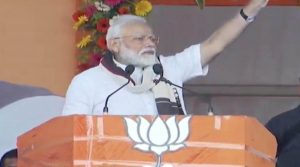 However, Modi’s victory is also a reflection on intransigence of opposition parties to glue together on a common platform. Congress, as the Main Opposition looks sclerotic under the amorphous leadership of Mr Rahul Gandhi, who otherwise carries credence through his dogged determination to expose Adani-Ambani–Modi axis. The masses do not possibly care about crony capitalism.
The wheel of Hindu fundamentalism had never been so raucous in Tagore’s secular Bengal. In A Tale of Two Cities, Dickens wrote: It was the best of times. It was the worst of times. It was the winter of despair. For Modi-Saha, it was the best of times, and for Didi and Stalin, it was the worst of times, and a summer of despair!



Leave a Reply
Be the First to Comment!