
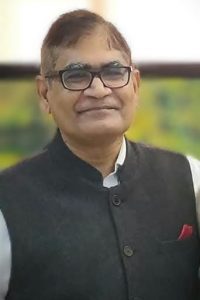
 Professor Satya Narayan Misra* in Bhubaneswar, November 19, 2026: Granville Austin, the venerated voice on the Indian Constitution, marked out three strands of the Constitution as a seamless web; democracy & institutions, social revolution and country’s unity and integrity . For Austin, Part III that crafts the fundamental rights and Part IV that conjures the quest for socio economic justice are the conscience of the Constitution.
While the Fundamental rights are enforceable in the constitutional courts, the founding fathers made Directive Principles unenforceable with an oxymoronic statement that “directive principles are fundamental in the governance of the country”.
The whole hearted embracing of Bill of Rights of US Constitution which stood on a tripod of life, liberty and property became the leitmotif of the final cut Constitution, while the lofty goals of ushering socio-economic justice for all citizens is caught in cross fire of hype and homily. Ivor Jennings felt that the “ghosts of Sydney Webb & Beatrice Webb (Fabian socialism) stalk through the pages of Part IV”.
The South African Contrast
This is unlike the Constitution of South Africa crafted in 1996, where the civil and political rights are fused with social and economic rights, making it one of the most progressive Constitutions. They have eschewed extreme positions of either being libertarian or communitarian but dignitaries; an approach which looks at ensuring that every citizen has a right to ‘live with dignity’, with judiciary setting a reasonable standard approach to fix the accountability of the state.
S26 provides right to have access to adequate housing to every one for which the State must take reasonable measures to achieve progressive realisation of this right. No one can be evicted from home without a court order. S27 provides right to have access to health care services, including reproductive health care. S28 guarantees children the right to basic nutrition, shelter, health care and social services. Children have right to be protected from exploitative labour practices. S29 guarantees every one the right to basic education, including adult basic education. Even for further higher education, the state should facilitate access and availability.
The Supreme Court of South Africa has played a stellar role in protecting these rights. The Grootboom Case (2000) is particularly interesting as a community involving Irene Grootboom and 900 people with 510 children living in appalling condition appealed for enforcement of their right to adequate housing. The Supreme Court using the reasonable standard approach came to the conclusion that the states’ housing program failed to meet constitutional guarantee. The case has led to increased access to housing for marginalized communities, with over 2.8 million houses built, proving shelter to more than 13.5 million people.
The Indian Position
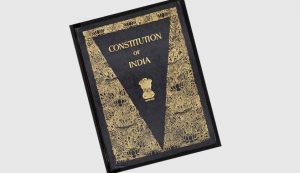 While the Constitution makes Part IV nonjusticeable, the Supreme Court has played a stellar role in mandating the state to realise the ‘goals’ by interpreting Article 21 as not merely “protection of life” but upholding the right to live in a dignified manner. This has brought in second generation rights like right to education, right to livelihood, right to clean environment which is part of directive policy as Article 48A as part of Article 21.
In the Unnikrishnan case 1993, the Supreme Court decreed that right to education is a part of rightto life. The government introduced 21 A as a fundamental right for education of children from the age of 6-14 in 2002 as a constitutional amendment. In the Olga Tellis Case1985, when the slum dwellers were getting evicted by the BMC, the Supreme Court opined that the right to livelihood of the slum dwellers was part of their right to life and stopped the eviction. It also held that the right to shelter is an integral part of fundamental right to live. It, however, did not make providing house as a condition of their removal. All the same, the case has been instrumental in shaping India’s approach to housing rights, with the state recognizing its obligation to provide affordable housing to marginalized.
Realising Socio Economic Justice
The problem of housing is indeed humongous in India. As per NFHS V survey 41.37% are deprived of housing and 45% are living in non –pucca houses. As per UN Habitat (2021) report, 236 million live in slums, with 66% lacking proper drainage and 41% sans proper latrines. There is a short fall of 18.78 million housing units in cities, forcing families to live in slums.This is despite government programs like PMAY which aimed to provide affordable housing to all. It would make eminent sense if the right to adequate housing should be made a fundamental right as it is the case in South African Constitution.
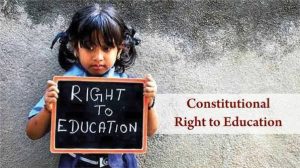 When the right to education from the age of 6-14 was made a fundamental right, inexplicably early child hood education from the age 3-6 was kept a directive as Article 45. This anomaly needs to redress now. The NEP -2020 has observed the dismal standard of schooling for children in the age group of 4-6 in the Anganwadi centres, where close to 45 million children (3-6) have informal learning by Anganwadi workers who lack adequate training & education. Ideally these children should be part of a government schools and have a fundamental right like children above the age of six.
The Road Ahead
Its high time that the civil and political rights must be fused with socio economic rights. Right to life must encompass reasonable health care, education of a child from the age 3-14, and reasonable accommodation to all. Sadat Hassan Manto in his satirical story “Naya Kanoon” commenting on the new 1935 Act highlighted how there is a yawning the gap between the vision of emancipation that the new Act promised for common people and the harsh reality that Tangewallahs like Mangufaced.
 Post-independence & economic liberalisation our quest for Vikshit Bharat & hype over high growth numbers clearly obfuscates the discrepancy between subaltern struggle for decent education, health care, housing and decent employment & he myriad promises that party in power makes.
As Justice Krisha Iyer, one of our most sensitive judges wrote: Social justice is gibberish if inhuman poverty is widespread and accumulated inequality is wearing the armour of wealth. Else, the likes of Mangu will become part of mass movements to fix the fault lines of liberal democracy, where the elites show scant concern for the ordinary citizens .
• Prof Misra teaches Constitutional Law



Leave a Reply
Be the First to Comment!