
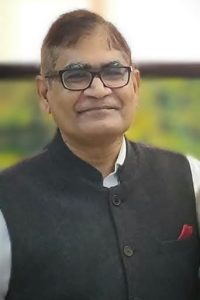
 Professor Satya Narayan Misra* in Bhubaneswar, October 14, 2026: The economic depression in the 1930s in the USA witnessed that the core assumptions of classical economics that free markets are naturally self-correcting and Say’s Law that “supply creates its own demand” smashed in to smithereens under the weight of prolonged global economic contraction& massive unemployment.
This systemic failure led British economist John Maynard Keynes to publish “The General Theory of Employment, Interest & Money” (1936) to argue that it is only by hiking public spending, consumption demand can be increased and private business will restart investment.
Macroeconomic stabilization was achieved through macroeconomic tools like public investment, and New Deal of the then President Franklin D. Roosevelt (FDR). The 70s witnessed stagflation, where high inflation conflated with high unemployment, when Keynesian fiscal policy intervention was found to be wanting. This spurred monetary hawks like Friedman and neo Keynesians in the 70s to look at monetary policy intervention as a substitute/supplement to fiscal policy.
This year’s Nobel Prize winners, Robert Hall & Michael Woodford, two neo Keynesians, is for their effort to improve upon the Keynesian model; to take account of how consumers & businesses actually make decision on investment and saving. The Nobel Committee found their models to link micro economic tools to achieve macroeconomic stability fascinating and salient.
Consumption as The Key
One of the seminal contributions of Keynes to economics is his theory of consumption function (1936) and its multiplier effect to stimulate an economy. For Keynes, consumption is contingent upon current disposable income. The first challenger to this theory was Milton Friedman who proposed the Permanent Income Hypothesis in 1957, as per which consumption is dependent on long tern expected permanent income.
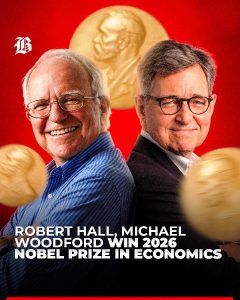 The Neo Keynesian, Hall fired the first salvo against Friedman by proposing in 1978 that consumption will depend on long term average future income rather than past permanent income. It was Robert Lucas , the Nobel laureate in 1995, who in 1985 proposed the Theory of Rational Expectation as per which individuals and businesses make economic decision based on all current available information including current government policies rather than looking at past experience or future expected policy. Historically, data has rejected pure versions of both Keynes current income or Hall’s random walk hypothesis, leading economists to blend these theories.
Micro Economic Tools for Macro Economic Stability
Michael Woodford, the other winner this year, has a pioneering text book “Interest & Prices: Foundation of a theory of Monetary Policy” written in 2003 to his credit. Woodford differs with the Lucas theory by posting that public expectation of future policy actually shapes current economic behaviour. For him, micro economic choice of households and firms in relation to competition, pricing and labour supply are critical; how interest rate policy can be used to achieve an inflationary target.
Balancing stabilization goals with pursuit of price stability is important for him. The Nobel committee notes how both Hall & Woodford’s models use micro economic tools & public expectation for achieving economic stability rather than being blinkered by Keynesian macroeconomic tools like consumption, multiplier, accelerator and investment for warding off economic instability.
The Belated Addition
Economics has been added to this panoply of global recognition through funding by the Swedish national bank as it commemorated its 300th anniversary in 1968. The first winners in 1969 were Ragnar Frisch & Tinbergen, the econometricians. The scope of economics was expanded to include Sociology, Political Science & Psychology in 1994.
Daniel Kahnhman was the first psychologist to receive the award in 2002 by debunking the basic premise of rationality in economics in his book Thinking Fast and Slow, by flagging systemic cognitive bias & intuitive short cuts in human behaviour. Robert Thaler followed him with his ‘nudge theory’. These theories have laid the foundation of behavioural economics. The award for economics has in a way is now a recognition for liberal arts. So far 101 have been awarded the prize, of which 3 were women and 2 from India.
The Contribution in Retrospect
In the 70s, several outstanding economists like Samuelson, Kuznets, Hicks, Arrow, Leontief, Hayek, Friedman and Lewis were recognised. Arrow’s impossibility theorem was a seminal contribution. Amartya Sen & Abhijit Banerjee, the two Indians, were recognised for their work on Human Development Index and applying RCT in Development economics. While Solow got the award for contribution of exogenous growth, Romar got it in 2018 for flagging the importance of endogenous growth and Mokyr, Johnson and Robertson got it last year for flagging the importance of innovation in economic growth.
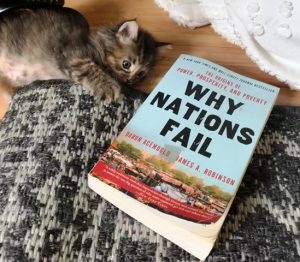 Acemoglu was recognised for his work on importance of institutions in a nation’s progress in his widely read book – ‘Why Nations Fail’? (written in 2012) – 12 years later in 2024. This year’s award to Hall & Woodford is similarly for their work in the 70s; albeit belatedly. The essential premises of these two laureates are that economic shocks are temporary.
However, experience shows that some of the shocks as in case of oil are not transitory. The price per barrel went up from $3 in 1970 to $13 in 1973 through the oligopolistic move of OPEC countries. It went through the roof to $ 37 in 1974 and has seen the volatile increase in recent times hovering between $94- $97. All the same, the insight of using micro economic tools and studying behaviour of firms and consumers towards economic stability will count as timeless contribution of Hall and Woodford.
The Missing Laureates
Thomas Piketty, who has been crying hoarse about the need to remedy extreme income and wealth inequality through greater progressive income tax and wealth tax and participatory socialism in his seminal book “Capital:The 21st Century” was nominated for this year’s Nobel but overlooked.
Jean Dreze, the Belgian economist, who has made India his home, and architect of inclusive growth through the marquee MGNREGA program rejects modern economics’ heavy reliance on abstract mathematical models divorced from reality of grinding poverty and poor human capability at the grassroots. Jeffrey Sachs, the key architect of MDG and sustainable development, keeps on batting for massive foreign aid & international investment to break the poverty trap through a Big Push. “Our greatest illusion, he writes, is that a healthy society can be built around mindless pursuit of wealth.”
John Ruskin writing in 1860 through his banned book “Unto The Last” bemoaned the diversity of economics from morality, reducing human life to cold mechanical utility of Mill and wealth maximization dictum of Smith. Gandhi adored Ruskin. In the quest for free markets, money, mathematics & modelling, we seem to be forgetting these crusaders who have been battling for human dignity of all and shared prosperity.
Peter Nobel, Alfred Nobel had observed: Alfred despised people who cared more for profits than society’s wellbeing. It’s time for the Nobel Committee to do introspection & course correction.
• Professor Misra is a prominent Voice in Development Economics



Leave a Reply
Be the First to Comment!