
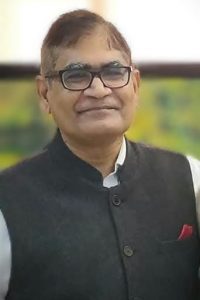
 Professor Satya Narayan Misra in Bhubaneswar, October 29, 2026: Amidst the current wave of far right Presidents in Chile, Argentina, Peru, Columbia and Ecuador, Lula’s win for the fourth term against hard core rightist Flavio Bolssanaro is seen to be a solid bulwark against that tide.
Flavio is an unabashed trumpeter of ‘illiberal democracy’ like Victor Orban in Turkey, an eugenicist who was promising chemical castration as penalty for pedophiles, disinvestment in public health, social welfare and environmental law and a huge promise to President Trump for giving preferential treatment to US firms in mining rights .
Lula, a skilled lathe operator who lost his little finger in the left hand in an industrial accident, came to power in 2002, on a promise to dismantle neoliberal economic policies by narrowing the enormous gap between rich and poor by expanding education through a novel BoslaFamilia program, redistribution of land & social welfare programs. But his most important contribution is protection of the environment and the Amazon forest, which was being systematically deforested by Jair, Flavio’s father during his infamous stint as President (2019-2022).
Responding to Lula’s win, the Left wing Leader of Opposition Vijayan in Kerala observed: “From Brazil to India, the lesson is clear that confronting the far right requires a systematic alternative rooted in workers’ rights, social justice and equality.” Hope in resurgence of Left Politics may be premature, but the quest for equity over efficiency and social justice over market fundamentalism, post Russian revolution is a real one.
P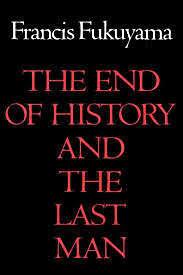 ost fall of the Berlin wall and disintegration of USSR by 1991, Fukuyama wrote End of History (1992), where he observed that “Western liberal democracy is returning full circle to an abashed victory of economic and political liberalism”. But beginning at around the global financial crisis in 2008, Putin’s Russia began a project to restore the Soviet domain, with its invasion of Georgia in 2008 and Ukraine in 2014.
The period from 2008 onwards also saw the rise of populist leaders in countries like Turkey, India and Hungary and most importantly Presidents like Donald Trump whose re-election has signalled a global shift away from the liberal principles around which the earlier order had been built. As liberal democracy seems to have lost its lustre, the grand fight is going to be between far right ideologues and left politics, with Lula kindling hope for resurgence of left politics.
When Fukuyama was asked to recant his arguments of ‘naïve liberal triumphalism’ he has come up with a book “In the Realm of the Last Man” where he explains how a liberal democracy balances three sets of institutions: a modern state, rule of law and democratic accountability. He believes that liberalism as a doctrine protects an individual’s right to choose.
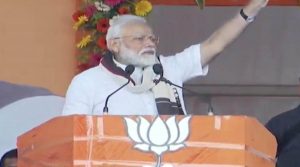 Much of the appeal of right–wing politics today lies in the narrower sense of community such movements offer, from Narendra Modi’s Hinduvta to Christian nationalists in the United States. The central challenge for contemporary liberals is how to “thicken our sense of national identity without veering off in an overtly illiberal direction.”Daren Acemoglu, the Nobel Prize winner has come up with a new book titled “What happened to Liberal Democracy?” where he brings out how by the 2000s liberal democracy had reneged on its core promises.
In the context of USA, he brings out how the US median inflation-adjusted wages increased by more than 2.5% per year between 1948 and 1973, which post 1980 shows a wage growth of .45% only. The richest 1% of US households increased their share of national income from around 10% in 1980 to a striking 22% by 2024.
Acempoglu believes that liberalism’s current failure is related to its abandonment of the working class and its priorities. He strongly argues that working-class liberalism should give support to the labour movement, so that unions can protect workers against abuses by powerful employers and rise to the challenge of promoting a pro-worker AI agenda. Latin America presents an interesting picture in this fading charm for liberal democracy.
Beginning with the Cuban revolution in 1959 against US backed Batista, Fidel Castro fobbed off US attempt to overthrow him in 1962. But it was Venezuela which was the first country to throw off US influence when Hugo Chavez was elected President in 1998 on a promise of greater spending on social service to alleviate poverty and of making trade agreements with Cuba.
The right wing forces backed by US finance tried to overthrow Chavez but he survived and became an inspiration for other Latin American voters, with Lula leading the way in 2002. As part of his anti-poverty program, the minimum wage of workers was increased by 25%, and the iconic BoslaFamlia paid monthly grants to poor families provided they sent their children to schools and had their health checked regularly.
As of 2020, the program covered 13.8 million families and paid an average of $34 per month. As per a UNDP study, the program has reduced income inequality by 20% since 2001 and significant reduction in exploitation of child labour. But Lula’s significant contribution came in his third term in 2022, when he promised to have zero illegal deforestation by 2030.
As against Jair Bolsonaro’s deforestation of 45000 kms during 2019-2022, it dropped by 71% during Lula’s tenure and created millions of hectares of protected area. He hauled Amazon out of economic plundering & environmental devastation. “An Amazon with greener cities, with cleaner air, mercury free rivers, healthier children and indigenous people who are respected. This is our Amazon dream”, said Lula.
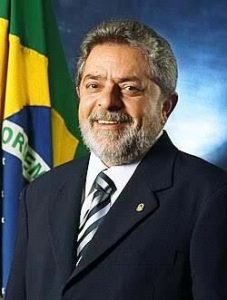 Lula faces critical economic, political and environmental challenges, with public debt standing at 82% of the GDP, high interest rate of 13.75% and how to balance his core promise of social equity with strict spending cuts to appease global financial markets and navigate his green agenda while dealing with a powerful agribusiness lobby. Compared to his earlier mandates, there is a decline in his popularity. Lula who took ownership of a first smart phone in recent days started posting to Instagram & TikTok. His digital reach overtook that of Flavio.
All the same, Lula’s win represents stability and an assurance to the working class that their interests will be taken care of and indigenous population can live peacefully in the midst of Amazon forest.
Ironically Trump treats Lula at par with Modi in terms of punitive tariff. For global South and BRICS, his victory will mean continuation of an important voice for multilateralism & a bulwark against far right forces. It would, however, be too premature to celebrate Lula’s win as a triumph for Left Politics in other countries.



Leave a Reply
Be the First to Comment!