
 By Nageshwar Patnaik in Bhubaneswar, October 6, 2026: Hindustan Aeronautics Limited (HAL), Koraput in Odisha on Tuesday delivered its 2,000th aero-engine while announcing a second production line for Shakti engines with an investment of ₹218 crore.
Scheduled to be operational by 2028-29, this second line will manufacture up to 100 engines annually to support indigenous helicopters like the Dhruv ALH and Prachand LCH. It will boost HAL’s total annual Shakti production capacity from 80 to 180 engines.
The Shakti engine powers India’s primary indigenous rotary-wing fleet, while serving as a stepping stone toward full propulsion self-reliance. The Shakti engine was tailored specifically to overcome hot-and-high operational challenges—such as deployments in the Siachen Glacier, Ladakh, and the Thar Desert. HAL, Koraput’s engines have powered frontline aircraft including the MiG-21, MiG-27, MiG-29 and Su-30MKI.
Defence Minister Rajnath Singh on Tuesday hailed India’s growing capabilities in the aerospace sector and called for strengthening indigenous propulsion capabilities in design, development, testing, manufacturing and MRO. Terming the construction of the 2,000th engine a “historic milestone” for India’s aerospace sector, the Defence Minister highlighted HAL Koraput’s contribution to strengthening the country’s aero-engine capabilities and the operational readiness of the Armed Forces.
“The construction of the 2,000th engine by HAL Koraput is a historic milestone in India’s aerospace journey. With the successful overhaul of more than 9,000 engines, this division continues to empower our Aero-Engine Capability and the Operational Readiness of our Armed Forces,” the minister said.
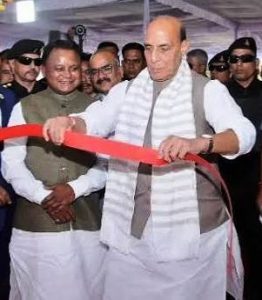 Emphasising the importance of self-reliance in defence production, Singh said indigenous aero-engine capabilities were essential for achieving complete aerospace sovereignty. “Self-reliance in aero-engines is the foundation of India’s complete aerospace sovereignty. Work underway on indigenous high-thrust engines, testing infrastructure, raw materials, and robust MRO capabilities is building a strong ‘engine ecosystem’ in the country,” he said.
Developing indigenous aero-engines is one of India’s top aerospace priorities, as propulsion remains the most technically complex sub-system to domesticate. While initially assembled via imported kits, the Shakti engine’s indigenous content is progressively climbing. A second production line at HAL Koraput will scale capacity to 100 engines per year by 2028–29 to support large orders of Prachand and Dhruv helicopters.
Safran Helicopter Engines and HAL established a 50:50 joint venture, SAFHAL Helicopter Engines. They have contracted to co-design and manufacture the Aravalli engine (3,500–4,000 shp) in Tumakuru, Karnataka. This high-power engine will drive the upcoming 13-tonne Indian Multi-Role Helicopter (IMRH) to replace Russian Mi-17 fleets.
The Gas Turbine Research Establishment (GTRE) is collaborating on a ~110 kN high-thrust engine for the fifth-generation Advanced Medium Combat Aircraft (AMCA), backed by planned capital outlays of around ₹5,000 crore.
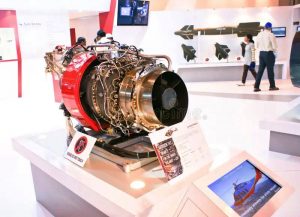 Besides, HAL is raising its annual production capacity for the Su-30MKI engines from 30 to 50 units, backed by a ₹335 crore investment. This ramp-up directly supports the Ministry of Defense’s ₹26,000 crore contracts signed for 240 new AL-31FP aero-engines.
The Koraput division is gearing up for the full-scale production of Russia’s Izdeliye 177S engine for the Su-57E. Expected to begin manufacturing by 2029-2030, this technology transfer equips India with advanced thrust-vectoring turbofan capabilities.
HAL continues to expand its commercial footprint through long-term partnerships, recently finalizing contracts with French aerospace major Safran via the SAFHAL joint venture to co-develop the Aravalli engine for heavy helicopters. They are also manufacturing core turbine forgings for commercial CFM LEAP engines.
Describing the aero-engine as the “heart” of an aircraft, Singh said reliable propulsion was essential for effectively utilising advanced airframes, radars, weapons and avionics. He emphasised the need for expertise in precision manufacturing, advanced materials, metallurgy, cooling technologies, testing and stringent quality assurance.


Leave a Reply
Be the First to Comment!