
 By Satya Narayan Misra,* Deepak Rout** in Bhubaneswar, October 8, 2026: Speaking at National
 Academy of Legal Studies and Research (NALSAR), Hyderabad, Justice Bhuyan, the stormy petrel in Supreme Court, said no amount of whataboutery could justify the exclusion of voters en masse from the electoral rolls. He was referring to deletion of approximately 13.3 crore voters so far, thanks to the EC’s frenzied drive for Special Intensive Revision (SIR).
He considers any such process that ‘leads to wholesale disenfranchisement violative of the principle of universal adult suffrage that India embraced in its Constitution and an affront to right to equality.’ Earlier Justice Nariman, who struck down the obnoxious Section 66A of the Information Technology Act, 2000, by restoring freedom of social media in Shreya Singhal Case (2014) termed the exclusion of voters and inordinate delay in deciding their appeals “a completely illegal knocking out of the common citizen of India, with right to vote in great peril”.
While a sitting judge taking a swipe at comrades in the court has irked retired CJI Gavai, who calls it judicial impropriety, the seeds of similar dissent was sown in January 2018 when Justice Chalaeswar and three judges Gogoi, Lokur & Joseph protested in public, the alleged selective & arbitrary assignment of sensitive high stake cases to junior & pliant judges under the CJI’s powers as “Masters of the Roasters” by CJI Deepak Mishra. The distinguished jurist Soli Sorabjee had called it ‘inappropriate’ and distressing.
The Major Concerns
 Transcending such concerns for propriety, discipline and rectitude among the judges, it is globally recognised that the judges are expected to speak truth to the power by applying the cardinal principles of rule of law, fairness and neutrality, without fear or favour. But as the celebrated US judge of Supreme Court Benzamin Cordozo had presciently observed “The great tides and currents which engulf the rest of the men do not turn aside in their course and pass judges by”.
The challenge to SIR in Bihar, which was stoutly challenged as being high handed and arbitrary in the Supreme Court was sweepingly overruled by the CJI Surya Kant in the summer of 2026, is a case in point. The backlash of that decision has not only changed the election outcome in Bengal through arbitrary deletion of 9 million names but has triggered a nationwide protest of not only the hoi poloi but senior civil servants a who are aghast at the way; Form 6 is being amended unauthorisedly, collective functioning of the EC is being given a go by and electoral rolls are being controlled centrally by ECI–NET platform and spirit of our Constitution being snuffed away .
What is at stake is emasculation of public trust in the CEC as an institution, which had an edifying record in the past in conducting a free and fair election by honouring the principle of universal adult suffrage.
The Main Pillars of May 2026 Judgement
CJI Surya Kant, writing on behalf of his colleagues Bagchi and Mohana drew reference to the seminal Supreme Court decision in M S Gil vs CEC case in 1977 where the court had considered EC’s powers of conducting elections plenary under Article 324 and judicial review barred once the election cycle clocks in under Article 329(b). The court did not find any conflict with RPOP Act 1950 and Electoral Rolls 1960.
The exercise satisfied the test of proportionality as it found a rational nexus between the objective sought; to have purified electoral rolls to conduct free and fair elections and the need to verify, scrutinise and revisit electoral rolls.The court did not find the documentation requirement excessive. The court did not agree with the contention of the appellants that the court was not following the guidelines in Lal Babu Hussain Case in 1995 that there should be a presumption of correctness in the electoral rolls and ‘there should be fairness I procedure for removing names.
CJI noted that the documentation exercise was in furtherance of constitutional mandate; to preserve integrity, accuracy and credibility of electoral rolls. One of the major bones of contention was interpreting S 21(3) of RPOP Act which stipulates that SIR can be conducted in any constituency or any part of the constituency.
The court interpreted ‘any’ constituency as applicable for ‘all’ constituencies, which has facilitated CEC’s messianic campaign to conduct SIR in all constituencies of the country! The only concession the Court made was to allow those who have been eliminated on the ground of citizenship to approach competent authority to take a decision under the Citizenship Act 1955.
The Road Ahead
Out of 13.3 crore voters deleted so far, around 75% are marked ‘absent, shifted, and other’, 20% due to death and 5% due to multiple entries. Around 9.9 cr voters can potentially come through Form 6, meant for new voters. The SIR exercise has entailed unprecedented evidentiary burden on voters, like women, migrant and marginalised groups. Even the privileged voters find it onerous to re-establish entitlement by reference to ancestral entry in 2003.
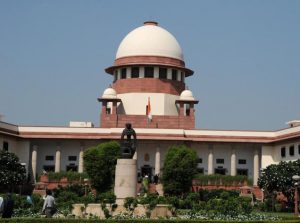 Most troubling is the interpretation of the court to mean ‘any’ as all constituencies under S21 (3) of the RPOP Act. It’s like Supreme Court’s decision in Advocates on Record case (1993) where they interpreted ‘consultation’ with CJI for appointing judges under Article 124 to mean ‘concurrence’, which has led to judges appointing judges under the collegium system. It’s also surprising that CJI SuryaKant has gone against his own judgement in October 2024 upholding S 6A of citizenship Act where the challenge was to disallow immigrants up to a cut off date under the Assam accord to vote as citizens.
Article 145(3) stipulates that any substantial question of law and interpretation of the Constitution should have a bench consisting a minimum of five judges.The year 2024 witnessed several substantial questions of law and interpretation of the Constitution decided by a Constitution bench, invalidating the opaque EBS scheme or allowing subclassification within SC for reservation by invoking substantive equality, or allowing royalty on mineral to the states, upholding federalism. The controversies shrouding interpretation of SIR deserves a larger bench.
The concept of universal suffrage seems to be getting scuttled through sweeping and arbitrary deletion of electoral rolls of ordinary and vulnerable citizens.
*Satya Narayan Misra teaches Constitutional Law / **Deepak Raut is Director, IAS Kalinga Academy



Leave a Reply
Be the First to Comment!