
 By Satya Narayan Misra* in Bhubaneswar, September 25, 2026: T M Krishna, the renowned Carnatic vocalist and Magsaysay awardee, who is an ardent advocate of ‘art’s power to heal India’s deep social divisions’ has challenged the Prevention of Insults to National Honour (Amendment) Act, 2026, as it compels mass singing of the entire six stanzas of Vande Mataram anthem at public functions, with noncompliance risking three years imprisonment or fine or both.
“By mandating rendition of all stanzas under penal sanctions, it sends a signal of majoritarian religious alignment and inflicts expressive subordination on believing Muslims and other conscientious objectors”, the petition says. It also strikes at the heart of Article 15(1) as per which ‘the state shall not discriminate any citizen on grounds of only religion and Article 25(1) which allows ‘all persons right to profess, practice and propagate religion’.
Justice Bagchi observed that “what is the National Song is not in dispute. But nobody can infract Article 25 (religious freedom) or subject a conscientious objector to penal consequences. “He also said the Supreme Court precedent in the seminal Bijoe Emmanuel Vs State of Kerala case in 1986 upholding the right to religious freedom, constitutional tolerance and silent objection still holds good.
 The Hoary History of Vande Mataram
It may be recalled that Vande Mataram was written as a poem of two stanzas by Bankim Chandra in 1875 and was later included in his novel Anand Math seven years later, by adding four more stanzas to it. Tagore sung the first two stanzas in 1896 Congress meeting. It was also sung in 1937 Congress session. The Parliament witnessed a fiery debate last December when Prime Minister Narendra Modi charged Nehru with betraying the National song for appeasing Jinnah.
In a convincing repartee Priyanka Gandhi cited letters involving Tagore and Nehru to show how two stanzas were adapted to preserve communal harmony. Be that as it may, an amendment to National Honours Act 1971 was passed in the Parliament on 30th July 2026 which elevates Vande Mataram to the same legal status and penal protections enjoyed by Jana Gana Mana, and criminalises disruption; preventing singing of national song or cause disturbance, with imprisonment up to three years, a fine or both. The Act is in line with Article 51A of the Constitution which mandates that every citizen to respect the National flag and the National Anthem as a fundamental duty.
The Bijoe Emmanuel Case (1986)
The case involved three Jehovah’s Witness children who were expelled from their school in Kerala when they stood respectfully and silently when the national anthem was sung, but refused to sing it. The court invoking Article 25(1) said, compelling individuals to sing the anthem violates their fundamental rights to freedom of conscience and that executive circulars can not be used to restrict fundamental right to freedom of speech and expression und Article 19(1) a).
The court emphasized that the true test of a democracy is its ability to preserve the identity and faith of the minorities under the Constitution. Alluding to Article 25, the court observed: “The question is not whether a particular religious belief or practice appeals to our reason or sentiment but whether the belief is genuinely and conscientiously held aspart of the profession or practice of religion.” In a striking defence of pluralism, the judges highlighted that Article 25 is an article of faith in the Constitution, incorporating recognition of the principle that the real test of true democracy is the ability of even an insignificant minority to find its identity under the country’s constitution.
Subsequent Judgements
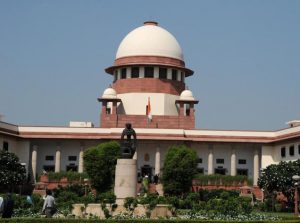 In Shyam Chowdury Vs UOI (2018), the issue was whether it was mandatory for national anthem to be played before a feature film stated and for every one to stand, the Supreme Court that it was directory and not mandatory and exempted those who are disabled from standing. In another case involving Dr Tawseef Ahmed Bhat of J&K, the Professor did not stand when the national anthem was played.
The High Court of J&K clarified that since he was not preventing singing of national anthem or causing disturbance which attracts penalty under S3 of the Act he could not be penalised. The court also clarified that it’s not mandatory to stand, though it’s a fundamental duty.
In another interesting case involving Shankar Ghosh and BJP MLAs, a challenge by TMC that the former disrespected when national anthem was being sung, the Calcutta High Court in 2023 did not allow the Kolkota police from taking criminal action against the legislators. It ruled that the allegations required deeper scrutiny to determine if the national anthem was being leveraged as a political tool. All these cases clearly show that the court has steered clear on mandatory obeisance when the national song is being played or eschewed from enforcing penal action.
Awaiting Denouement
The petitioner draws reference to the last four stanzas where there is mention of Hindu deities like Durga, Luxmi and Saraswati, which he considers as in on secular. Justice Bagchi’s counterpoint was that homage to a particular God may not impact secularism in a constitutional democracy, while assuring that the court will examine if the 2026 amendment and government circulars have the potential of choking the rights of conscientious objectors.
Dr Murlidhar, the lawyer on behalf of the appellant mentioned that the definition of national song required a broader debate. The Solicitor General responded by observing ‘lets not bag the national song in sensationalism. John Stuart Mill’s essay “On Liberty” establishes that individual’s freedom ends where it causes direct harm or infringes upon the liberty of others. In that sense, having a penal provision like S3 in Act for someone who is disrupting when national song is being sung or causing disturbance seems logical.
In his recent book ‘ the Nobel laureate Acemoglu brings out how there is a back sliding of democracy and how shared prosperity in a free market economy is not being shared by the working class. In a liberal democracy like India, the present amendment is fuelling insecurity in the minds of the minorities who believe that majoritarian religious belief is being thrust on them. As the case would gather steam, one hopes that the sound principles set out in Supreme Court’s judgement in Bijoe Emmanuel Case are not diluted and that rendition of national song is not thrust upon conscientious objectors under the threat of penal action.
* Professor Emeritus, Constitutional Law



Leave a Reply
Be the First to Comment!