
 By Satya Narayan Misra* in Bhubaneswar, July 20, 2026: There has hardly been a more absorbing or exciting experience in modern cricket than watching the progress of Garfield Sobers to the status of the greatest all–round cricketer in the history of the game. Everything about his cricket was memorable; even that strange forward leaning sag-kneed walk which was precursor of the knee damage that eventually hobbled him. But It did not inhibit him until he had scaled all the heights and done so with a gloriously joyous athleticism.
Born with an extra-fifth finger on each hand (amputated early), he began his first class career for Barbados as an orthodox left arm finger spinner at the tender age of sixteen. In the next year (1954) he played his first test as an orthodox slow left- armer, but he had already started to develop his batting. Surely enough, four years later against Pakistan at Kingston, he made his first test century – 365 not out, one run more than the test record of Len Hutton set in 1938.
The cricket world was his oyster. He perceived the value of wrist spin, ‘China man’ and its associated googly and added fast medium to his repertoire which gave him swing, movement off the seam, and nip of a natural pace bowler. In the field he was spectacular in the outfield or covers as a young man, became a fine slip and ultimately, a phenomenal short- leg . No wonder he took 235 wickets & took 5 wickets six times and 109 catches in93 tests.
The Batsman
As a left handed batsman, he was the finest the game has seen, a touch ahead of South African Graeme Pollock and Brian Lara of the West Indies. Pollock was suspect against good spin, and Lara, his protégé who broke his test record had trouble coping with aggressive short pitched bowling. Sobers with a generous back lift and full follow through, had no such weakness. He was a murderous driver of the ball, a hooker of pace and quicksilver against spin. With collar characteristically up, shirt slashed almost to the waist, he scored 8032 runs in 93 tests at an average of 57.78 with 26 centuries – a number exceeded at that time by Donald Bradman.
The Don considers his innings of 254 at Melbourne in 1971-72 against Australia, with bowlers like Lillie, Massie, Jenner and Kerry O’Keeffe firing on all cylinders, the greatest he had seen, the footage of which is still used as a template for back foot play. He savaged Dennis Lilee, the dreaded fast bowler. His hundred came from 129 balls. His last test century came at Lord’s in 1973 when he scored 150 against England, helping West Indies to a win. His century was scored on the back of a full night’s drinking, no sleep and two very large port and brandies mid innings!
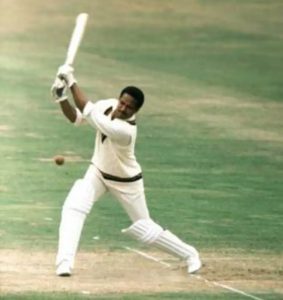 Sobers, The Captain
When Frank Worrell retired in 1963 he recommended Sobers for the role of West Indies captain. He had seen his audacious century in the famous tied series against Australia in 1960. Sobers was reluctant as he was worried that captaincy might constrain the freedom of spirit he brought to his cricket and life. However, he responded by leading West Indies to their first series victory against Australia in 1965. He had little time for defensive play or dull tactics. It brought its rewards, but also one blunder that was to dog him forever. On the final day of the fourth test in the 1967-68 series against England in Port of Spain, he declared, giving England to score 215 in165 minutes on a turning pitch. England won by seven wickets.
Sobers was pilloried and seen thereafter as a reckless gambler. The 1966 series against England was his pinnacle, excelling in all areas. In the first test at Old Trafford he made 161, and followed that with an unbeaten 163 at Lord’s to save a game that looked lost. At Headingly, the decider, he made 174 and followed that with 8 wickets for 80 in the match. No other all-rounder, including Kallis, Botham & Ben Stokes of recent times had such a defining contribution in a test series . In batting, Viv Richards made similar impact in England a decade later.
Post Retirement
He was keen to play in the first world cup in 1975, but Lloyd picked up veteran Kanhai instead. That year, he was knighted by Queen Elizabeth for his services in Bridgetown. But his declining health necessitated operations on his knees and later, his eyes. In 1998, he was made a National hero of Barbados by PM Owen Arthur. In 1994, he was sitting in the stands at Antigua when Lara hit a short ball from England seamer Chris Lewis to the square leg boundary to create a new record test score. During the inevitable interruption in play he made his way to the pitch to embrace the young man. Sobers was feisty but a generous opponent, unselfish, intolerant only of artifice or those who could not see the fun to be had from the game. While he enjoyed the record while it stood but was equally happy when it changed hands.
Sobers, the Sui Generis
The match at Swansea in 1968 was remarkable for Sobers’s lusty hitting against Malcolm Nash, a medium pace left armer of Glamorgan. After the first three balls were hit over the fence, high on adrenaline, he hit the next three for six too –becoming the first batsman in history to do so in one over. In January 1985, batting against Baroda at Bombay, Ravi Shastri hit TilakRaj, a left arm spinner for six sixes in an over.
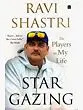 Shastri writes in his book ‘Star Gazing’ “The heady feeling remained with me till I reached home, when my father took me aside and said: Fantastic son, but remember, there can never be another Gary Sobers’. Shastri writes “Our views often clashed. But in this, I was in complete agreement.” Whether with the bat, ball or in the field, inebriated or normal, Sobers embodied excellence and his achievements will continue to define the standard to which generations of cricketers can aspire. He is more than a sporting icon; a symbol of excellence, resilience and possibility, sui generis and in a league of his own.
• Prof Satya Misra is a cricket Buff



Leave a Reply
Be the First to Comment!