
With over 14,000 wars between 3500 BC and the late 20th century, humanity has experienced more war than peace. The latest war by the United States of America and Israel combo with Iran has pushed the Middle Eastern countries to the brink. Thousands of civilians including children have died during the war, which has been paused at the moment.
 It has cost the countries more than a trillion dollar. The war also had economic impact across the globe with the world’s biggest oil supply disruption since the 1970s energy crisis, surges in oil and gas prices, disruptions in aviation and tourism, and volatility in financial markets. And yet peace eludes till date with negotiations between Iran and USA leading to nowhere.
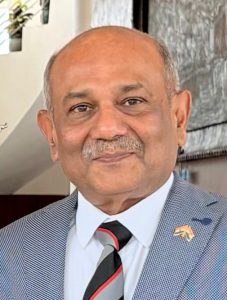
Brigadier Dr Laxmi Charan Patnaik – one of the eminent soldier-scholar of the country with vast experience in operational combat, military diplomacy, conflict resolution and human resource management in the Armed Forces and the Civil Services, has served as India’s Defence Adviser for the Middle East in the Embassy of India, Tehran during 2003-07. Brigadier Patnaik has immense practical experience in conflict resolution and military diplomacy in Iran, Iraq, Afghanistan, Central Asia and neighbouring countries. He is now Professor Emeritus in the Indian Government managed Rashtriya Raksha University in Gujarat.
Excerpts from an Interview by Nageshwar Patnaik with Brigadier L C Patnaik……
 NP: How do you look at the latest crisis in the Middle East?
LCP: The current crisis in the Middle East must be understood as a structural confrontation rather than a transient escalation. It reflects a deeper contest between competing regional orders—one driven by technological dominance and deterrence, the other by asymmetric resistance and strategic depth. The escalation is rooted in nuclear threshold anxieties, the consolidation of proxy networks, and the erosion of classical deterrence. These dynamics have created a volatile equilibrium where neither side is willing to concede strategic space. The ceasefire is a tactical pause rather than a genuine de-escalation. History repeatedly shows that such pauses often serve as periods of regrouping and recalibration rather than pathways to peace.
NP: Are Israel and the United States achieving their stated strategic goals, or are these conflicts moving toward a state of perpetual war?
LCP: While there have been tactical gains, the broader strategic objectives remain unfulfilled. The denial of nuclear capability cannot be achieved solely through military means, especially when knowledge and intent persist. The conflict appears to be evolving into a pattern of managed instability, where escalation and restraint coexist. This creates the conditions for a prolonged engagement without decisive resolution. Such conflicts tend to become self-sustaining, with each cycle reinforcing the next, thereby increasing the risk of a perpetual conflict environment.
NP: How has the role of non-state actors—such as Hezbollah, Hamas, and the Houthis—changed the nature of conventional warfare in the region?
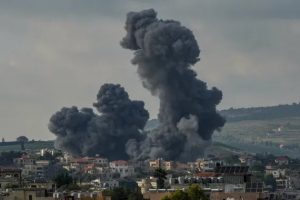
LCP: Non-state actors have transformed the character of warfare by decentralizing conflict and expanding its geographic and operational scope. They introduce ambiguity, resilience, and flexibility, making traditional military responses less effective. Their presence creates a multi-layered battlefield where direct confrontation is supplemented by proxy forces. This increases the complexity of escalation and reduces the effectiveness of conventional deterrence. It was in this light that US is silent to Israel’s action against the Hezbollah in Lebanon and Hamas in Gaza strip.
NP: What is the current level of autonomy for non-state actors like Hezbollah, Hamas, and the Houthis?
 LCP: Non-state actors in the Middle East today operate in a complex spectrum between strategic alignment and operational autonomy. Hezbollah, Hamas, and the Houthis are not mere proxies in the classical sense; they are ideologically aligned partners with independent tactical agency. Iran has mastered what may be termed a “distributed deterrence model”, where power is projected not through direct confrontation but through a network of actors capable of imposing costs across multiple theatres. This is not unprecedented.
NP: The United States officially commenced a naval blockade of Iranian ports on 13 April 2026. Is the blockade working?
LCP: The blockade has imposed economic pressure, but its effectiveness is constrained by Iran’s ability to adapt through alternative networks and partnerships. While it raises the cost of resistance, it has not compelled strategic compliance. Instead, it risks provoking countermeasures that could further destabilise the region. The blockade has also come under serious diplomatic ruffle with China. Thus, the blockade is operationally significant but strategically doesn’t help in achieving political end states.
NP: How do you look at the present conflict which has already created cracks in the North Atlantic Treaty Organization (NATO) and the Gulf Cooperation Council (GCC)?
LCP: The conflict has exposed underlying divergences in threat perception among alliance members. Economic dependencies, geographic proximity, and national priorities have led to differing strategic responses. This indicates a broader shift from cohesive alliances to more transactional alignments, where cooperation is increasingly issue-specific.
NP: Has the US achieved its war objectives in Iran? Is military action the ultimate solution to Iran’s nuclear ambitions?
LCP: The objectives remain unmet. Military action can degrade infrastructure but cannot dismantle technological capability or political resolve. A sustainable solution requires a combination of diplomacy, verification, and strategic engagement. Military force alone cannot achieve lasting outcomes in such complex scenarios.
NP: Why Pakistan, which is known for long for harbouring terrorist outfits, has been chosen to be a mediator? Why did India not take the lead to bring the leaders of warring nations to table?
LCP: Pakistan’s role as a mediator reflects its geopolitical positioning and its ability to maintain channels with multiple stakeholders. India’s approach, by contrast, reflects strategic restraint and a commitment to balanced engagement. Its decision not to intervene directly is a calculated choice aligned with its broader foreign policy objectives.
 NP: Will Iran be able to bear the American and Israeli onslaught in the coming days despite massive degradation of its Armed Forces (Air Force and Navy), missiles and drones?
LCP: Leadership decapitation is intended to create instability, but Iran’s institutional structure provides continuity. Its governance system is designed to absorb shocks and maintain operational effectiveness. External pressure often reinforces internal cohesion, particularly when national sovereignty is perceived to be under threat. While internal dissent exists, a civil revolution under current conditions appears unlikely.
NP: How has security threats shifted from conventional military engagements to hybrid battlefields involving drones, maritime attacks, and economic sabotage?
LCP: Security has evolved into a hybrid construct where multiple domains operate simultaneously. Traditional military engagements are now integrated with cyber operations, economic coercion, and information warfare. This creates a continuous conflict environment, where actions below the threshold of war can have strategic effects. The result is a more complex and persistent form of warfare that challenges conventional doctrines and response mechanisms.
 NP: What is the likelihood of a closure of the Strait of Hormuz, and how would such an event redefine global energy prices and trade principles like “transit passage”?
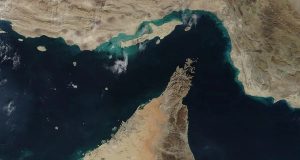
LCP: The Strait of Hormuz remains one of the most critical maritime chokepoints in the world. A complete closure is a high-risk, high-consequence scenario, and therefore unlikely to be sustained. However, even partial disruption has already demonstrated its capacity to shock global markets. The strategic significance of Hormuz lies not merely in its geography but in its psychological impact on global energy security. Even limited supply disruptions historically have led to profound economic consequences worldwide.
NP: You served as India’s Defence Adviser for the Middle East in the Embassy of India, Tehran during 2003-07… Two decades later, has the situation changed?
LCP: While the underlying fault lines remain, the scale, complexity, and technological intensity of conflict have transformed dramatically. The region has moved from state-centric conflicts to multi-domain warfare involving non-state actors, cyber tools, and real-time information operations. It has transitioned from instability to systemic volatility, where crises are continuous and interconnected.
NP: Will the escalation involving the U.S.-Israel alliance against the Iranian regime lead to a prolonged regional war?
LCP: The trajectory suggests a shift toward a prolonged, multi-dimensional conflict rather than decisive war. This will involve sustained proxy engagements, economic warfare, and calibrated direct strikes. The risk is not of a short war, but of a long-duration regional contest with sustained global impact.



Leave a Reply
Be the First to Comment!