
 Professor Satya Narayan Misra* in Bhubaneswar, February 26, 2026: On23 rd February 2026, the CJI Surya Kant & Justice Bagchi, responding to a petition about the rising spectre of cow vigilantism and failure of the states to comply with the guidelines issued by the Supreme Court in the landmark Tehseen Poonawala Vs UOI case in 2018 observed that the ‘general directions’ issued by the highest court in 2018 were ‘unmanageable’ and washed its hands off the responsibility to uphold rule of law.
A week earlier, the CJI declined to entertain petition seeking an FIR against hate speeches by a sitting CM, which are a ‘corrupt practice’ under RPOP Act 1951 under S123 (3A), with the CJI remarking that ‘bypassing the High Court is a calculated effort to demoralise them.’ This is a disturbing trend and goes against the expectation of ordinary Indians and minorities in particular that the Supreme Court is the last lamppost to uphold their fundamental rights to live with some modicum of dignity and get protected against majoritarian highhandedness.
The Tehseen Poonawala Case (2018)
Disturbed by increasing incidents of cow vigilantism, like killing of Akhlaq in 2015 after rumours circulated that he had slaughtered a cow and stored beef in his home, hanging of two men in Jhakhand by cow vigilante, flogging of Dalits in Una, lynching of Pehlu Khan in Alwar on suspicion of smuggling a cow, Martin Macwan, a Dalit Rights activist, Mohanbhai Bedva, an alleged victim & Tehseen Poonawala, an activist lawyer filed a writ petition in August 2016. They challenged the cow protection laws in six states, Rajasthan, UP, Maharashtra, Gujarat, Jharkhand and Karnataka which protected such action ‘done in good faith’. For instance, S13 of Maharashtra Animal Protection Act 1976 provided that ‘No suit, prosecution or other legal proceedings shall be instituted against anything which is in good faith’. Lynching could be done in good faith!
The Landmark Decision
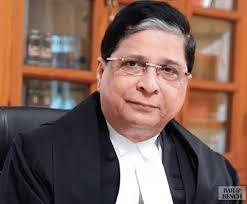 CJI Dipak Misra writing the judgement on behalf of Justices Khanwilkar and DY Chandrachud in July 2018 observed that no individual in his own capacity or as part of the group can take law in to his/their hands and deal with a person treating him as guilty. Mob justice in any form is opposed to principles of legal system and inconceivable in a civil society. If unchecked, lynching may become as ‘the new normal’ and alluded to how Mark Twain had once referred to USA in 1901, as ‘the US Lyncherdom’, criticising the country’s lynching culture and racial violence.While the Supreme Court did not strike down the section on good faith, it emphasized that it is the primary responsibility of government to protect all individuals irrespective of race, caste, class, or religion and issued a few guidelines.
As preventive measures, it suggested that the SP should be the nodal officer to prevent incidents of mob violence and lynching and constitute a special task force to procure intelligence reports about people who are likely to commit such crimes and hold regular meetings. On remedial measures, it advised the SHO to lodge an FIR and inform the nodal officer. The Nodal officer was advised to personally monitor the investigation. The state government was asked to make a competent scheme in light of provision of S357 CrPC. Such cases should be tried in a Fast Track Court and maximum punishment awarded.
The Supreme Court also suggested punitive measures against such officials who are found to be deliberately negligent. CJI Misra observed: The exigencies of the situation require us to sound a clarion call for earnest action to strengthen our inclusive social order which, in turn, reaffirm the constitutional faith’. The Court in conclusion suggested that the Parliament should create a separate offence for lynching and provide adequate punishment for the same. It ended with the prophetic words” Fear of law and veneration for the command of law constitutes the foundation of a civilised society”.
The 23rd February 2026 Direction
The eight-year-old verdict had reverberated as a sharp judicial criticism against a spate of lynching & communally coloured mob violence which has been occurring since 2014. It had warned that the rising wave of frenzied mob, fed by fake news, self-professed morality and false stories would consume the country like a typhoon like monster. Instead of reiterating the highest court’s sharp directives, CJI Surya Kant & Justice Bachi suggested to take up each crime on its singular merits and facts and acting on any infraction of a person’s right or abuse of law.
The top court was of the opinion that it could not possibly ‘micromanage ‘criminal prosecutions in different areas or different states sitting in Delhi. In particular, its observation that the directions of the court in 2018 to prevent and prosecute lynching cases as ‘unmanageable’ is most unfortunate and untimely, in the prevailing climate of the majoritarian party trying to foment communal passion and widen the communal divide further.
The Moment of Reckoning
 The Preamble of the Constitution promises to secure to all its citizens ‘fraternity’ and enjoins upon them to ‘promote the spirit of brotherhood’ as a fundamental duty. Lynching is an affront to the rule of law and to the exalted values of the Constitution. The extrajudicial attempts under ‘the good faith’ clause of animal protection acts have to be nipped in the bud; lest it would lead to rise of anarchy and lawlessness which would plague and corrode the nation like an epidemic.
Emile Durkheim wrote: Unity based on heterogeneity and diversity is organic solidarity. Since 2018, cow vigilantism has grown monstrous, while the police and state governments in many places overlook or even encourage mob violence in the name of cow protection. Research by Armed Conflict Location and Event Data (ACLED), concludes how cow vigilante action by Hindus was the primary reason for violence against Muslims between June 2019 to March 2024.
Granville Austin, the eminent commentator of our Constitution had observed that’ the judicial system in India has failed substantially to serve the seamless web of the constitution; of democracy, social revolution and national unity, through it dilatory process.’ The Supreme Court of late is not only becoming dilatory but also retreating from its firm stand taken earlier. MC Setalvad , India’s first Attorney General at the inauguration of the Supreme Court in 1950 had observed : Like all human institutions, the Supreme Court will earn reverence through truth. That moment of reckoning has come.
*Prof Misra teaches Constitutional law



Leave a Reply
Be the First to Comment!