
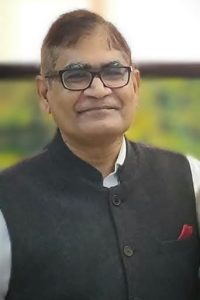
 By Professor Satya Narayan Misra and Dr Prateek Mishra* in Bhubaneswar, October 1, 2026: We
 stand today at the cross section of two major challenges of our times, climate justice and digital inequality, where the child is a silent victim as they neither can vote, nor can litigate alone being underage. Justice Krishna Iyer once reminded us that children are “supreme national assets and they should be treated with special care”.
Investing in their wellbeing, nutrition and education is the finest investment a community can make, he said. Sadly, these assets are today pitted against a climate debt and a digital divide and rights deficit, they did not create. The courtroom, the classroom and the server room, the air we breathe, the water we drink, the fauna and flora that surround us are now equally jurisdictions of childhood. The law must govern all three with equal seriousness and there must be democratic accountability for slippage between promise and performance.
Children & Climate Justice
The Indian Supreme Court’s ruling in Ranjitsinh Vs UOI (2024) is a watershed moment where the court addressed the conflict between protecting the endangered Great Indian bustard and expanding solar power infrastructure in Rajasthan and Gujarat. The court held that the ‘right to be free from adverse effects of climate change ‘ is part of Article 14 &right to life under Article 21. It noted that climate change hurts the vulnerable, poor and indigenous communities the most; thereby expanding canopy of right to life further.
Even before that Ridhima Pandey, a nine year old had filed a petition through her father before NGT arguing that government has failed to take adequate steps to mitigate climate changes. When NGT did not entertain her appeal, the Supreme Court in February 2025 has given significant direction to eight central Ministries to coordinate on climate action and criticised the present siloed approach.
It would be interesting to note how sixteen children including Greta Thunberg petitioned the UN Committee on the Rights of the child in 2019 against five states for insufficient emission cuts. Ayakha Melithof, a South African petitioner aged 17 wrote; People who are older are not paying enough attention because they will not be as affected. They do not take us children seriously, but we want to show them we are serious’.
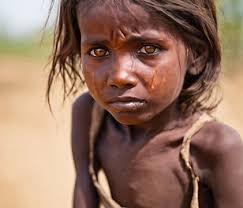 In a historic decision, the Committee held that a state can be held responsible for the transboundary impact of its carbon emissions on children’s rights, even outside its own territory. When SDG Goal 13 on Climate action is read together with SDG 4 on Education and SDG 16 on Justice, it is sad that none of these frameworks yet contain a dedicated chapter on children’s rights.
Professor Elizabeth Donger in a perceptive article “Children in Climate Litigation” (2022) argues that ‘growing involvement of children and young people in climate litigation has the potential to advance children’s rights both outside and inside the court room, while institutionalising protection for children’s rights.’
Digital Equality & Justice
Digital equality stands on a tripod of universal access, affordability for the common man and inculcating capability through appropriate training . The UNICEF brought out that COVID 19 has only highlighted the urgency of rethinking ways in which education is designed and delivered to meet the demands of a rapidly changing and increasing digital world. The ASER Survey (2024) brought out how the pandemic led to severe digital divide and massive drops in foundational literacy and numeracy because underprivileged children lacked online access. The India Inequality Report (2022) of OXFAM how the poorest 20% only had 2.7% computers and 8.9% access to internet. In terms of digital financial platform, the bottom 40% account for 15% while 70% do not have digital services.
One of the ironies of India’s growth story after economic liberalisation has been the increasing income and wealth inequality in India. As the World Inequality Report (2026) brings out, while top 10% accounted for 32% of total income and bottom 50% accounted for 20% in 1991, it increased to 58% for the top10% and plummeted to 15% for the bottom 50% by 2024.
As Thomas Piketty and Abhijeet Banerjee bring out, this increasing inequality is not due to accident of history but due to conscious public policy which has favoured the superrich. Tax justice has been upended as the highest tax rate for top earners which was 56%in 1990-91 has been reduced to 30% now, with a clamour for further reduction. Wealth Tax was abolished by Arun Jaitley in 2016. This has serious implication on digital divide also, though Right to Food Act has somewhat ameliorated the nutrition deprivation of the bottom 50% and multi-dimensional poverty headcount ratio stands at 11.2% for 2022-23.
The Future
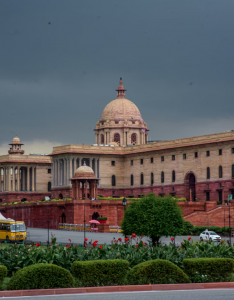 The Delhi High Court held that denying gadgets and internet access to economically weaker and disadvantaged students amounted to ‘digital apartheid’, violating articles 144, 20 and 21 along with RTE Act 2009. The Directive Principles are the soul of the Constitution. Article 38(2) enjoins upon the state to ‘eliminate inequality of facilities and opportunities’, among which proving quality education at affordable cost by government institutions and provision of digital resources to all children and imparting proper training are a critical requisite to achieve digital equality and justice. NEP 2020 at Para 24 provides for ‘ensuring equitable use of technology, make available affordable computer devices, connectivity and trainers’.
These public policy precepts must be put in to practice and the government made accountable as there is a huge chasm between promise and performance. The Magsaysay award winner Sainath in an article ‘The Top Court & The Troubled Countryside’, writes that the Supreme Court must ‘treat the DSPPs more seriously, beyond reemphasising their importance from time to time. ‘It is high time that rights of children in terms of climate justice and removing digital apartheid are taken seriously.
Greta Thunberg had observed: “The future of all coming generations rests on your shoulders. What you do now, we cannot undo in the future.’ The children born today will inherit the climate, the courtrooms and class rooms we build now, and we have to take them seriously and the government must move beyond the ‘mindless pursuit of wealth. ‘
*Prof Mishra is Emeritus Professor and Dr Prateek Mishra, is Assistant Professor, KIIT Law School, Bhubaneswar.



Leave a Reply
Be the First to Comment!