
 By Satya Narayan Misra in Bhubaneswar, September 14, 2026: Though a mystic at heart, Tagore was resolutely of this world, had a passion for education and profound pride in India. He travelled across the world after receiving the Nobel Prize in literature in 1913. Everywhere he went, he interviewed educators, visited schools, and studied text books and reading materials.
He wrote a letter from Moscow in September 1930 in which he expressed his conviction that ‘education is the ideal path for solving all our problems’. He noted that Russia’s success was not merely the numbers being educated, but the thoroughness and its intensity’. He added Japan to his list of successes and wrote in October, sailing over the Atlantic “In my view the imposing tower of misery that rests today on the hearts of India hasits sole foundation in the absence of education. Caste divisions, religious conflicts, precarious economic conditions all centre on this single factor”.
While India has come a long way in terms of universal access to school education, lack of gender discrimination, the quality dimension, of which Tagore had noted during his stay in USSR, remains an unfinished song, a troubled script, despite our massive leap in economic progress in free market India.
PMs & Education in India
Nehru, who tried to script the story of secular, democratic, modern India out of the dustbin of British imperialism was waylaid by his fascination with visible temples of modern India, like steel plants, fertilizer factories and dams and hardly made any kept him away from the effort of creating world- class education system for India. Neither did his daughter, nor his grandson Rajiv care much about the quality dimension despite Kothari Commission’s recommendation to earmark 6% of GDP to education.
Education, in terms of budget allocation received around 3.5% of the budget, despite school education being made a fundamental right in 2002 and RTE Act taking effect from 2009. Manmohan’s free market economy philosophy struck roots in 1991, gained traction under Mr Vajpayee (1998-2004) and has anchored firm roots under Mr Modi for the last 12 years. While the growth rates have doubled in the free market era (1991-2025) compared to dirigiste regime (1950-1990) and infrastructure has witnessed a sea change, there is a general consensus that the free market era has not resulted in commensurate improvement in the education profile of India.
Education Policy: Post Free Market
I t was during the tenure of Mr Vajpayee, who ushered in telecom reform & India’s massive journey in national highways, Kumar Mangalam Birla & Mukesh Ambani gave a report to the government in 2000 on what reforms need to be introduced in the Education sector. Unabashedly pro market, it proposed a Private University Bill in field of Science, Technology, Management & Finance, opening higher education to private and foreign universities (FDI), higher tuition fees, upgrade ITIs, and expected an enrolment of 75% in higher secondary by 2015.
The report did not carry muster as the proposals will lead to reduced state funding and will make higher education less accessible to economically disadvantaged students. The Supreme Court judgement in Prof Yashpal Vs State of Chhattisgarh in 2005 was a body blow to proliferation of fly-by night private universities, taking advantage of the 2002 Act, by stipulating that executive notification violated Centre’s exclusive authority to ‘coordinate and determine standards of higher education under Item 66 of the Union List of the Constitution.’ The Court in TMA Pai Foundation judgement (2002) has ruled that commercialisation and profiteering in education is illegal.
NEP 2020
Education policy rests on a tripod of Universal Access, Equity between Genders & Promotion of Excellence. NEP 2020 goes beyond Rajiv’s NPE 1986 to promote equal opportunities and special emphasis on access for women, SC & ST & puts a special thrust on Quality in line with SDG Goal 4 of Quality education. Noting the consistent plateau in learning outcomes in government schools as brought out by successive ASER surveys since 2010, it has pitched for universalization of foundational literacy & literacy for all students by the age 10 or Grade3 by 2025, improve early childhood education being imparted to around 30.3 million poor children in the Anganwadis, change the 10+2+2+3 structure to 5+3+3+4, dismantle the wall separating liberal arts with STEM, establish NRF to promote a culture of innovation across India’s universities, colleges and research laboratories & improve GER in higher education to 50%.
It also called upon the states to guarantee equal, barrier free access & quality education to children with special needs. Sadly, we lost out two years for realising these laudable objectives but since 2023, implementation of NEP 2020 is high on rhetoric & low on outcomes.
A Stocktaking
There are roughly 10 lakh government schools, 3.4 lakh private schools, with universities increasing from around 640 in 2014 to 1117 in 2025. The major spurt has been increase in private universities from 171 to 455, with hardly any increasein centraluniversities. The NIPUN Bharat Mission to achieve FLN is still to cover substantial ground to eliminate ‘learning poverty’. Rural digital divides structural teacher shortages in remote regions and a lingering cultural obsession with rote testing over concept comprehension slow down class room level success.
Further, whileinstitutional mechanisms allow liberal arts and STEM to intersect, 2026 systemic review published in Frontiers in Education, the roll out of these multidisciplinary frameworks shows a clear divide between adoption and capability. Studies highlight that 72% of institutions suffer from severe faculty gaps when executing true interdisciplinary teaching.
While premier tier-1 institutions feature thriving interdisciplinary hubs, 82% of HEIs lack physical infrastructure and laboratory to studio access required for integrated STEAMM education. Despite curriculum changes, market pressures still disproportionately favour traditional STEM pathways due to direct tech placement pipelines, reducing liberal arts electives to mere box ticking exercises rather than deep dive studies.
The Way Forward
Sadly the allocation to education, which is a joint responsibility of the states and the Centre stand fixated around 4% as against the recommended 6%, with Centre contributing 1% only and severe asymmetry in state level spending by states like Kerala , Tamil Nadu and Odisha. As per MoSPI Comprehensive Modular Survey, coaching costs average Rs 9950 annually for urban higher secondary students compared to Rs 4548 for rural families due to perceived and actual gaps in formal education quality.
The Urban Rural divide, the wide chasm between miniscule Tier I educational institutions and large number of state and private universities in terms of resource allocation and quality and increasing thrust of the Centre to outsource education to the private sector puts the quality dimension under severe stress.
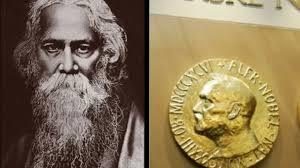 The cry for accountability in the conduct of competitive examination in a transparent manner has manifested in the present outcry to improve the neglected edifice of public education. Tagore wrote in Gitanjali “The song that I came to sing remains unsung to this day. The blossom has not opened; only the wind is sighing by”. Tagore’s hope for that the song of quality education will blossom remain an unfinished script, bereft political will in India’s free market economy.



Leave a Reply
Be the First to Comment!