
 By Satya Narayan Misra* in Bhubaneswar, August 24, 2026: Like the Keshavanand Bharati judgement in 1973, sculpting inviolability of ‘basic structure’ doctrine, the Bangalore Water–Supply Board judgment in 1978 giving an expansive definition of industry to protect labour rights has stood the test of time for 48 years.
However, by a majority of 6-3, helmed by CJI Surya Kant, the Supreme Court has decided on 20th August 2026 that the definition of industry under S2(j) of IDA Act 1947 would now be interpreted based on the the text of new Industrial Relations Code (IRC -2020), ‘unburdened by the legacy of 1978 judgment’. CJI has also clarified that the definition of industry needs further refinement.
In a sharp dissent Justice Nagarathna & two other judges have cautioned that altering the definition of industry could ‘create uncertainty and disrupt industrial peace’. They believe that the triple test provided in the seminal 1978 judgement to define industry would ‘safeguard workers as state functions are increasingly shifting towards privatisation, out sourcing & Public Private Partnerships’.
The Landmark 1978 Judgement
The Industrial Development Act 1947 provides a legal framework for conciliation, arbitration & adjudication of conflicts between employers and workers, pre-empting illegal stoppage of work while safeguarding labour rights. S2(j) of the Act defines industry as ‘any business, trade, undertaking, manufacture, or calling of employers & including any calling service, service, employment, handicraft or industry occupation or avocation of workers’.
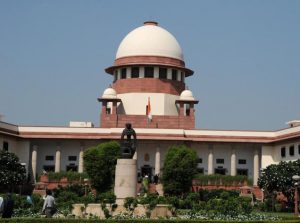 Noting the ‘zigzag course’ the Supreme Court had taken around the meaning of industry in the past , a seven judge bench headed by Justice Krishna Iyer identified three elements that would characterise an industry, viz a systematic activity, cooperation between employer and employee and production or distribution of goods and services to satisfy human wants, excluding purely spiritual or religious services.
It observed that in a welfare state, the government increasingly undertakes commercial and economic functions, which cannot be excluded from labour law protection. It rejected the arguments that public utility services carried out by statutory bodies like Bangalore Water Supply board should automatically fall outside the scope of industry.
The Apex Court clarified that only a narrow category of sovereign functions falls outside the scope of the Act. The bench’s decision was driven by Justice Iyer’s ‘new school of social jurisprudence’ where he believed that an attempt was being made to ‘deindustrialize activities by excluding labour unrest and worker menace from the precincts of elite industrialism’.
The August 2026 Judgement: Majority Take
CJI Suryakant in an interesting judgement on behalf of five colleagues observes that the settled course of 1978 judgement began to be questioned ‘as the river of the law flowed in to newer terrains’. Alluding to changing economic landscape of India after 1991, the scope of private sector has considerably expanded, while government function is limited to Constitution functions, regulation and governance oriented. The breadth of interpretation in 1978 risks modest undertakings, charitable institution and small scale economic activity.
The concern for the majority is not whether workers ought to be protected but whether existing formulation of triple test ‘risks encompassing activities that Parliament never intended to characterise as industry’. Seeking to preserve a balance between labour welfare and small enterprises, charitable institutions and commercial oriented activities, the majority believes that the triple test lends itself to undue subjectivity and open-ended in to its enquiry.
Invoking the rule of Noscitur a Sociis, where the judges are called to determine the meaning of unclear words, he believes that there is a need to reformulate and refine the test and interpret the words in S2(j) of IDA Act . On the contrary, Justice wrote in his 1978 judgement: ‘legalese and logomachy have the genius to inject mystique in to common words, alienating the laity in effect from the rule of law.’
The Dissenting Opinion
Justice N agarathna observes that the ID Act has now been repealed by IRC 2020, including Section 2(j), whose interpretation was under reconsideration. Any pronouncement on S2(j) could cast a shadow over interpretation of industry, under Section 2(p) of the new IR Code. Reconsideration could result in pending matters being unsettled or remanded
; producing uncertainty in industrial adjudication. Justice Datta noted that institutional credibility lies in respecting finality of decisions. Justice Datta expressed concerns over the exclusion of charitable institutions from the definition of industry. A technician is not concerned whether a hospital is run for charity or profit. It cannot be contended that the technician is not a ‘workman’ covered under the ID Act.
CJI Surya Kant has clarified that the reformulated triple test was not intended to displace the governing legal position in pending proceedings. Justice Datta also avers that all pending references arising out of the industrial dispute, made under the ID Act, must be taken to its logical conclusion in accordance with the interpretation of industry in Bangalore Water Board case. Justice Bagchi notes that although the ID Act preceded the Constitution, the Constitution later institutionalised the welfare oriented schemes of the statute. His opinion notes that any interpretation of S 2(j) of the ID Act must be consistent with the constitutional promise of dignified life under Articles 28, 39 and 43. Despite being part of the majority judgement, Justice Bagchi holds that the triple test must not be interfered with.
The Concluding Thoughts
In this backdrop CJI Surya Kant’s observation that the triple test of Krishna Iyer to define industry and labour rights is like ”an albatross around mariner’s neck” is rather unfortunate and uncalled for. The trade unions argue that narrowing the 1978 precedent will allow charitable, philanthropic or sovereign–adjacent institutions to bypass labour accountabilities.
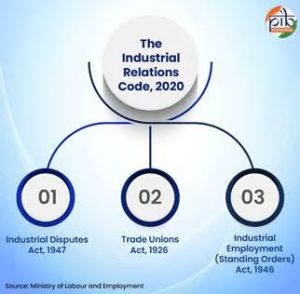 The opposition leaders also voice that distancing the new codes from the 1978 definition risks vital protections amid rising privatisation. Justice Nagarathna rightly warns that discarding the broad, worker friendly definition would unsheathe a supercharged version of corporate power. The dissent strongly rejects the majority’s decision to wipe the slate clean for the new IRC.
Institutional credibility lies in respecting well-articulated finality and not in perpetuating doubt. In the swirling all-pervading power of the corporate sector, the temptation to emasculate labour rights is real, with a government is in consort to promote crony capitalism. It’s better not to open the Pandora box of a well settled definition of industry.
*Professor Misra teaches Service Law in a reputed Law School



Leave a Reply
Be the First to Comment!