
 By Professor Satya Narayan Misra in Bhubaneswar, August 16, 2026: In his well-publicised book Future of Freedom (2003) Fareed Zakaria wrote that constitutional institutions –such as judiciary and the rule of law are far more foundational to preserving a free society than having elected institutions.
Nine years later Acemoglu and Robinson in their Nobel winning book ‘Why Nations Fail?’ presciently observed: it is the quality of institutions that separate economic success or failure of a nation. It would be interesting to see how Dr B R Ambedkar put these seminal ideas in to the script, to ensure that elected constitutional bodies like, the Judges of the Supreme Court & High Courts, Comptroller and Auditor General (C&AG) & the Chief Election Commission (CEC) are selected fairly and are men & women of substance.
The Constitution envisages different appointment procedures for each of the bodies. As Indian democracy trundled along, there is a distinct perception that both the selection and quality of persons at the helm do not give a great sense of comfort in preserving rule of law and bolster the pristine roots of liberal democracy.
Appointment of Judges, C&AG & CEC
Dr B R Ambedkar as the leading voice in drafting the constitution warned against letting judges pick judges or veto of Chief Justice of India (CJI) in selection of judges. Nor did he agree with the view of many members that it should be through Parliamentary approval, calling it a ‘dangerous proposition’. He instead proposed a middle course where the President will consult CJI and knowledgeable judges, skirting supremacy on either side.
Article 124(2) was an offshoot of this middle path. In case of the C&AG, he again parried the suggestion for Parliamentary approval and strict statutory qualification & instead settled for government of the day deciding the appointment, without prescribing any qualification. Article 148 crafts this amorphous provision. The appointment of the CEC, Ambedkar did not accept the members’ suggestion for two third vote of the Parliament. Instead he chose the path of deferral by suggesting that a law could be made ‘in that behalf by the Parliament’. Article 324(2) encapsulates this middle path, leaving it to the executive to decide CEC appointment.
The Turf War on Judges’ Appointment
While the appointment of C&AG has not attracted joust in the Supreme Court so far, the appointment of judges has attracted serious debates, with the Supreme Court deciding in 1993 that the word ‘consultation’ in Article 124(2) actually meant ‘concurrence’ of CJI and sowed the seeds of collegium of three judges deciding appointment of judges. Subsequently in 1998, they expanded the strength of the collegium to five.
The Parliament to checkmate this unilateral selection of judges brought in an amendment to Article 124 by bringing in National Judicial Appointments Commission (NJAC), a broad based selection process in 2014, which was struck 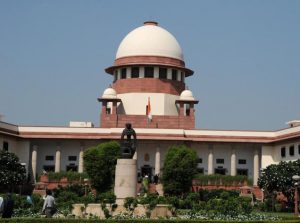 down by the Supreme Court as violating ‘independence of the judiciary’. The lone dissenting voice in Supreme Court’s majoritarian diktat was Justice Jasti Chalameswar who considered the collegium system to be ‘completely opaque’ and removal of the executive from the selection process against the principle of ‘checks and balance’.
Justice Krishna Iyer, one of the most respected voices in judiciary criticised the ‘secrecy of the process’, and appointment by senior most judges selecting successors as ‘unscientific and insular’. Despite such withering criticism, successive CJIs have been defending the collegium system, perpetuating nepotism & opacity.
The Debate on CEC Selection
The appointment of CEC by the government took an interesting turn when a Constitution bench headed by Justice Joseph in Anoop Barnwall case in 2023 expressed surprise that despite elapse of 70 years; the Parliament had not passed any law on the modality of appointing a CEC. It suggested that a Committee consisting of the PM, CJI and LOP in Lok Sabha should select the CEC till the Parliament passes a proper law. It cited landmark cases like Vishakha Rani Case to reiterate judiciary’s role in filling up gaps in the interest of public welfare.
The BJP government in December 2023 introduced a new law, replacing the CJI from the Committee with the Home Mionister, thereby ensuring that the government writ will prevail in the process of appointment. Dr Jaya Thakur, an intrepid activist, challenged the Act as violating the direction of Constitution bench in 2023. In January 2024, CJI Khanna & Justice Dutt, refused to stay the law.
CJI Surya Kant recused from the case in January 2026, as it could attract conflict of interest if he was a party to the selection process. In May 2026 Justice Dutt has taken the position that the Burnwall judgement could not be read as requiring the Parliament to enact law in any specific manner. He seems to skirt the basic question that free and fair elections require the selection of CEC to be protected from ’executive control’.
Integrity Institution
 In a landmark judgement involving selection of CJ Thomas as Chief Vigilance Commissioner (CVC) by a High Power Committee (HPC), a bench headed by CJI Kapadia struck it down as unconstitutional in 2011 as the HPC did not consider relevant material concerning pending criminal case against Thomas in import of pemoline oil. Calling CVC as ‘integrity institution’ to preserve rule of law and bolster public trust, the judgement ensured that future appointments are conducted with highest standards of integrity, legality and fairness.
The same analogy can be extended to the appointment of judges to the High Court & Supreme as custodians of fundamental rights and CEC who is mandated to conduct elections in a free & fair manner. It must be remembered that a fair selection process would necessarily select a competent and upright person who will uphold the pristine values of the Constitution.
Our experience shows that a handful of judges like Justice Krisna Iyer and Justice H R Khanna have shown that courage of conviction. Justice Khanna could go against the tide and decide at the height of emergency that right to life can be not snuffed away without a fair trial. He risked elevation to the post of CJI. Similar gumption was shown by Seshan & Lyngdoh as CECs , to ensure free and fair election .
As Fali Nariman rightly observes about the judges, “Above all they must be men & women of courage”. This applies to all integrity institutions like CEC & the C&AG.



Leave a Reply
Be the First to Comment!