
 By Neelanjana Paul and Kamalakanta Das*, August 14, 2026: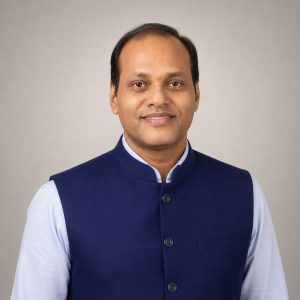
Political freedom in 1947 gave us the right to determine our own journey and destiny. Economic reform in 1991 expanded opportunity. Recent creation of digital public infrastructure has brought banking and payments into the hands of millions. India has made remarkable progress in financial inclusion.
As of July 2026, the Pradhan Mantri Jan Dhan Yojana had enabled 58.63 crore accounts, with deposits exceeding ₹3.08 lakh crore. Nearly 56 per cent of these accounts are held by women, while almost 78 per cent are in rural and semi-urban areas. This is a substantial national achievement: the bank account is no longer a privilege of the urban middle class.
The payments revolution is equally striking. In July 2026 alone, UPI recorded over 23.6 billion transactions worth nearly ₹29.9 lakh crore. A tea seller, a craftswoman, a farmer, a student and a small shopkeeper can now transact digitally with remarkable ease. India has shown the world that public digital infrastructure can democratise access.
Yet a vital freedom remains unfinished i.e financial freedom. Opening an account is not identical to knowing how to use it wisely. Making a digital payment is not the same as understanding interest, insurance, inflation, risk, fraud, taxation, contracts or the long-term implications of a loan. Financial awareness is the first step; financial wisdom is the destination.
A financially secure citizen is less vulnerable to exploitation, better prepared for emergencies and more capable of supporting family, community and nation. Every citizen should be able to understand money, make informed choices, protect savings, access fair credit, and plan for contingencies and participate confidently in the country’s growth.
This distinction matters urgently. In the age of social media, many Indians receive financial advice through short videos, reels, forwarded messages and self-declared “finfluencers”. Some offer useful introductory information. But many blur the line between education, entertainment, promotion and advice. A confident voice, a luxury backdrop and impressive jargon can create an illusion of expertise. Citizens, who do not understand risk can be pushed by peer pressure, fear of missing out and speculative excitement into unsuitable investments, excessive borrowing or outright scams.
The problem is deeper than financial literacy alone. Modern financial security rests on at least five literacies: financial, digital, cyber, legal and AI literacy.
Financial literacy teaches citizens to budget, save, borrow responsibly, insure themselves and evaluate investment risk. Digital literacy enables them to use platforms and payments safely. Cyber awareness helps them recognise phishing links, fake loan applications, impersonation calls and fraudulent QR codes. Legal literacy tells them that they have rights, contracts matter and grievance-redressal mechanisms exist. AI literacy is now indispensable because synthetic voices, deepfakes and highly personalised scam messages can make deception look frighteningly real.
 A citizen who knows how to transfer money but cannot identify a fraudulent request is not financially secure. A family that has insurance but does not know how to claim it is not fully protected. A young investor who follows market tips without understanding diversification, regulation and risk is not empowered; he or she is exposed.
India therefore needs a national movement from financial access to financial capability.
This must begin early. Financial education should be introduced in schools not as a dry chapter on banking but as practical life education: earning, saving, budgeting, digital safety, insurance, credit, taxes, fraud reporting and ethical decision-making. Colleges should offer short, credit-bearing modules tailored to arts, science, law, engineering, medicine and management students. Financial capability should not be confined to commerce classrooms.
Every panchayat, urban ward, self-help group, college and workplace should have access to simple, trusted financial capability programmes in local languages. Odisha, with its strong SHG movement, entrepreneurial youth and digital aspirations, can become a laboratory for such a mission. Community educators must be equipped to explain financial products without becoming product sellers. Public institutions, banks, regulators, universities, civil-society organisations and responsible industry should collaborate to create independent, accessible learning resources.
The second pillar is protection. Each citizen should know a few non-negotiable rules: never share an OTP, PIN or password; verify before investing; do not act under urgency or fear; check whether an adviser or platform is regulated; preserve records; and report suspected fraud immediately. Financial capability must include knowing when to say, “I do not understand this yet.”
The third pillar is productive opportunity. Financial freedom cannot come merely from better consumption choices or safer savings. It requires incomes, enterprises, assets and dignified work. Here, India must reconnect with its own civilisational confidence.
For centuries, merchants, artisans and maritime communities from Kalinga, Bengal, Andhra, Gujarat, Tamil Nadu and Kerala built trade links across Asia and beyond. India’s commercial imagination was never limited to survival; it created networks of enterprise, craftsmanship, shipping, finance and cultural exchange. Entrepreneurship is indeed in our social DNA. But in many places, it has weakened in our institutional muscle memory.
 Today, Atmanirbhar Bharat, Vocal for Local, manufacturing, agriculture, technology, start-ups, crafts and the green economy offer an opportunity to renew that memory. A farmer should be able to understand market prices, credit and crop insurance. An artisan should be able to sell digitally and retain fair value. A woman-led SHG should be able to graduate from saving to enterprise. A young person should be able to distinguish between a quick-profit promise and the patient creation of productive wealth.
The ultimate purpose is not individual enrichment alone. A financially capable society strengthens public life itself. Educational institutions, hospitals, cultural organisations and welfare institutions should not have to abandon their missions because they lack sustainable financial planning, diversified funding or credible governance. Governments, too, should be able to invest confidently in education, health and social protection because citizens and institutions are more productive, secure and resilient.
India’s first freedom struggle was fought for political sovereignty. The next great democratic project is financial freedom: freedom from ignorance, predatory debt, avoidable fraud, dependency and fear. It must be inclusive, ethical and anchored in productive enterprise.
A financially literate India will be better. A financially wise, digitally secure and opportunity-rich India will be truly free.
* Neelanjana Paul is a London-based financial market educator and Kamalakanta Dash is a Delhi-based public policy analyst.



Leave a Reply
Be the First to Comment!