
 By Nageshwar Patnaik in Bhubaneswar, July 8, 2026: There is good news for about 9 million Indians over the age of 60–that is 7.4% of India’s elderly–currently live with dementia. Alzheimer’s cases account for 70% of the people suffering from dementia. Boston based Porosome Therapeutics Inc (PTI), which made a major breakthrough in Alzheimer’s Disease (AD) research; last month entered into a drug development partnership with the Indian government managed Council of Scientific and Industrial Research (CSIR).
The partnership primarily aims at the collaboration, co-development and licensing of new and novel drugs. The CSIR announcement highlighted priority domains for collaboration with PTI: viral infections, Alzheimer’s disease, neurological diseases, cystic fibrosis, Type 1 and 2 diabetes, Chronic Obstructive Pulmonary Disease (COPD) and lung cancer.
The porosome, discovered by Porosome Therapeutics Chairman Prof. Bhanu P. Jena, is the secretory portal of the cell. Changes in proteins comprising the porosome lead to a broad range of secretory diseases. Porosome Therapeutics has developed a wide range of therapies ranging from small molecules and peptides to biologics that introduce functional porosomes into diseased cells to overcome secretory defects and treat diseases, even reversing them.
In 2025, Porosome Therapeutics announced the determination, for the first time, of the porosome-mediated secretory dysfunction responsible for Alzheimer’s Disease (AD). These new findings provided a window to the design and development of new peptide drugs and the identification of small molecules to both treat and reverse the disease. The Company’s cell line, animal and human organoid studies showed that, in addition to bringing back normalcy to both the structure and function of brain neurons, its products reduce the AD biomarker pTau217 and dissociate amyloid plaques, therefore moving beyond the traditional focus on just amyloid accumulation.
“We are delighted to partner with CSIR, one of the world’s leading research institutions, in translating the porosome discovery to treat many debilitating diseases. This partnership will be transformative,” said Professor Jena. The Porosome Therapeutics has developed for the first time, a breakthrough disease reversal therapy for AD.
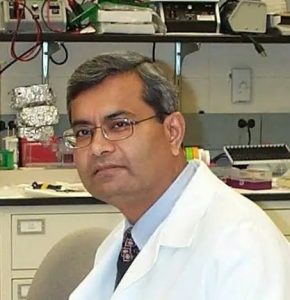 “We are pleased to join forces with CSIR, India’s leading research and development organization, to develop medicines to overcome chronic conditions and the associated economic and human cost,” said Guillermo Marmol, President and CEO, Porosome Therapeutics, Inc. “We believe that this unique partnership will infuse a powerful and enduring drug development platform beneficial to humanity.”
As India ages–one in every five Indians will be a senior citizen by 2050, when the number of elderly Indians is expected to reach 340 million. Recent national research estimates that roughly 8.8 million Indians aged 60 and above currently live with dementia. If prevalence remains the same, demographic ageing alone will push that number up to about 16.9 million by 2036. These figures point to a doubling of the dementia burden within a little more than a decade, driven mainly by population ageing.
Globally, dementia already affects tens of millions of people and is expected to rise sharply over the coming decades, with most of the increase occurring in low and middle-income countries. PTI has identified the secretory dysfunction responsible for the disease and developing advanced therapeutic neuronal nanomachines. These innovations have the potential to revolutionise Alzheimer’s treatment and redefine research approaches beyond the traditional focus on amyloid accumulation.
According to the Alzheimer’s Association in the United States, Alzheimer’s and other dementias cost $355 billion in 2021, and the cost could reach $1.1 trillion in 2050. Consequently, the demand for Alzheimer’s drugs is huge in the United States, and the world market demand is much larger.
Porosome Therapeutics, Inc., of Boston has established a subsidiary in India, “Porosome Therapeutics India Private Limited” moving both its AD and Cystic Fibrosis (CF) assets, amounting to over $10 billion dollars. This will take India from a leader in drug manufacturing to a global leader in new drug discovery and development, Prof Jena remarked.



Leave a Reply
Be the First to Comment!