
 By Professor Satya Narayan Misra in Bhubaneswar, June 16, 2026: The average non-Iranian gets information in snippets, filtered by algorithms. The Iranian diaspora is too fractured and traumatised to educate every one. The regime has muffled the voices inside its borders, responding to every uprising with internet black outs that hide both the people’s rage and its own violent response. Before, the bombs began falling on Iran earlier this year; the war was sold by its advocates as possible catalyst for regime change.
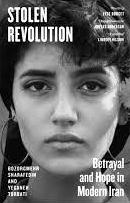
Yet the coordinated bombing campaign by Trump & Netanyahu earlier this year has only strengthened the most hard-line elements of the Iranian state. In this scalding confusion, Torbatti, a New York Times journalist and Sharafedin, a veteran Iran correspondent bring out one of the most perceptive books on Iran, delectably titled “Stolen Revolution: Betrayal & Hope in Modern Iran”, capturing not only the machinery of ruthless repression that perpetuates it, but the fragile hope that still survives as its underbelly. It’s a badly needed corrective because it is at oncean engrossing story but a meticulously researched primer on present day Iran.
The Revolution of 1979
The revolution of 1979 that gave rise to today’s Islamic Republic was the culmination of tensions that intensified in the wake of the CIA –backed coup restoring the Shah to power after a brief exile in the 1950s. It was animated by competing promises of justice, freedom and moral order, as well as fight against foreign domination. The coalition that finally toppled the Shah for good included clerics, leftists, students, nationalist and secular intellectuals, united less by a shared rejection of the present than by a shared rejection of the present. As power narrowed in to the hands of clerical elite around Ayatollah Khomeini, what followed was not the triumph of one coherent ideology. The revolution that was launched with egalitarian ideals and hopes, Torbatti & Sharafedian write, “has resulted in a mafia state”.
The early years of early revolutionary movement witnessed participation of Islamic scholar Mehdi Karrubi. He helped to distribute Khomeni’s speeches across Iran. Hounded and repeatedly arrested by the Shah’s secret police, he helped construct institutions that would support Khomeni’s government. He defended the revolution even as it narrowed politically and morally, enforcing a conservative dress code and banning Western music.
But the regime eventually became something far harsher, resorting to mass execution and torture to assert control. The brutal Iran-Iraq war of the 1980s accelerated that transformation. Bolstered by US arms, the eight-year conflict empowered the para military force known as the Islamic Revolutionary Guard Corps (IRGC) and normalised a politics of sacrifice and surveillance that reshaped public life.
Green Revolution
When Green Revolution erupted in 2009 in response to the disputed re-election of the hard right populist President Ahmadinejad, Karroubi became one of the regime’s most outspoken internal critics. The books’ second part comes alive in its portrait of younger Iranians who experienced the revolution not as a lived memory but as a political inheritance. The authors detail the re-emergence of civil society at the turn of 21stcentury, during the Presidency of Khatami. Newspapers flourished. Student youth groups and literary circles proliferated, creating spaces in which democratic practice became part of daily life rather than abstract political theory.
 Torbatti and Sharafeddin vividly evoke the mixture of exhilaration and improvisation that defined the Green Movement: campaign materials passed phone t phone by Bluetooth in subway stations, a human chain stretching for dozens of miles through Teheran. Millions poured in to the streets demanding greater accountability. And once again, the State endured-not because dissent disappeared, but because institutions built to contain dissent proved stronger than the forces challenging them.
Woman, Life and Freedom Movement
This protest movement in September 2022 after the death of Mahsa Amin, a young Kurdish woman who was arrested by the morality police for wearing her head scarf incorrectly was a watershed moment for Iran. Women and men taking to the streets outraged over the slew of social ills symbolized in Amini’s death –the subjugation of women, the repression of minorities, religious chauvinism, police brutality and government corruption. Despite the brutal repression by the Iranian authorities, the movement created ripples in countries like Canada and Germany. For Amini: “The true energy of democracy is patriarchal culture. It is that culture that must be fought.”
Marjane Satrapi, the most widely read Iranian author, who died this month, known for her highly acclaimed graphic book Persepelis debunked the West for their lack of understanding of ordinary Iranians, who are not dead eyed terrorists nor donkey riding peasants from dark ages. Greatly influenced by the Freedom movement the cover of her last book showed a crowd of women who wear no veil, shouting, with their cascading hair on fire.
In present day Iran, its no longer religious minorities or women or young liberals protesting; it’s the Muslims, old men, parents and the poor. Stolen Revolution resists despair, like Satrapi, who was sure “freedom will arrive at the end”. The revolution never fully ends, as the activists and dissidents gather, organise and imagine otherwise. Like the forces that it opposes, itrecedes, hardens and bounces back. Stolen Revolution is a must read for any one who cares about human rights or justice in the Middle east.
In the hide and seek of freedom and organised repression, hope and despair and Trump’s failed mission of regime change in Iran, Torbatti & Sharafedin see a wisp of hope and light, for a revolution stolen by Islamic fundamentalism.



Leave a Reply
Be the First to Comment!