
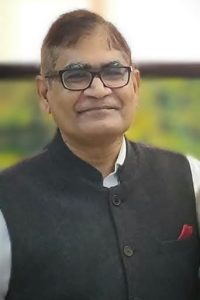
 Professor Satya Narayan Misra * in Bhubaneswar, April 29, 2026: When the constitution bench of the Supreme Court in September 2018 with 4-1 majority, opened the doors of Sabrimalai temple to women of all ages, there were massive protests in Kerala, particularly from Nair Service Society alleging that the court had disrespected religious creed. Others saw the verdict as transformative, outlining a vision that enlivened the Constitution.
The court was essentially debating four aspects viz. (a) whether the Ayyappa are a separate ‘religious denomination’ in terms of Article 26, (b) Is women’s exclusion in the age group of 10-50 an ‘essential religious practice’ in terms of Article 25(2), (c) does prohibition on menstruating women’s entry violates right to equality, right against discrimination and abolition of untouchability under Articles 14, 15 & 17 respectively and (d) importance of constitutional morality. Faced with a flurry of appeal, a nine judge bench headed by CJI Surya Kant are trying to grapple with these issues yet again.
Essential Religious Practice
While religious freedom is provided in Articles 25 and 26, they are subject to the overall rubric of state having to ‘maintain public order, morality and health’. Article 25(2) (a) further contemplates regulation by state of ‘economic, financial, political or other secular activity associated with religious practice. This is where the Supreme Court in the Shirur Mutt Case in 1954 has brought in a distinction between what constitutes ‘essential ‘vs‘ non-essential ‘ religious practice . While carrying a kirpan by Sikhs is an essential religious practice, Tandav dance by Anand Margis was considered non-essential by the Supreme Court in 2004.
Similarly in the landmark Shayara Bano Case (2017), the court struck down triple talaq as not being an essential practice under Islam . In the Sabrimalai Case also, the majority of judges felt that denial of entry on the ground of menstruation not an essential religious practice. However, Justice Indu Malhotra in a powerful dissent viewed exclusion of women of a certain age from temple precincts, in furtherance of religious custom ‘a non–derogable essential religious practice’.
Religious Denomination
While Article 25 is an individual right, Article 26 is a collective right granted to a ‘religious denomination’, which in 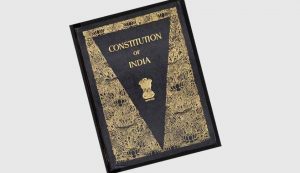 turn, will have the right to establish & maintain religious institution and manage its own affairs. The Constitution, however, does not define exact contours of religious denomination. In Shrur Mutt Case (1954), the Supreme Court defined religious denomination as a ‘collection of individuals’ classed together under the same name, a religious sect or body having a common faith or organisation.
In SP Mittal Case (1983) it seemed to have settled the law on religious denomination as a “body which has common faith, organisation and a distinctive name”. It did not consider the followers of Sri Aurobindo constituting a separate religious denomination. In the Sabrimalai judgement, the majority of judges did not consider the Ayappas as a separate religious denomination. On the other hand, Justice Malhotra, the dissenter argued that the Ayappa devotees constituted a protected religious denomination under Article 26(b).
Constitutional Morality
The basic bedrock of majority viewpoint in Sabrimalai case was based on constitutional morality where constitutional values of equality, dignity and liberty take precedence over social morality and religious tradition. Justice Nariman emphasized that customs that promote inequality must be superseded by constitutional morality. The majority believed that that when religious practices are rooted in discrimination against a particular gender, that cannot be considered essential and must be reformed.
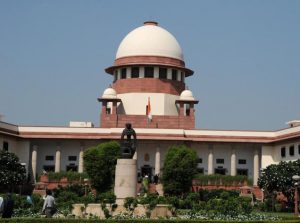 On the other hand, Justice Indu Malhotra argued that right to equality cannot override right to freedom to practice religion. In her opinion rationalism cannot be applied to religious beliefs and the right of a religious denomination to manage its affairs should be respected even if the practice is not logical. She argued that the court should not intervene in religious practices unless they are “pernicious, oppressive or a societal evil like Sati.”
Balancing Community Interests with Individual Dignity
This issue has long plagued our jurisprudence. Over the years, when the Constitutional courts have been called to resolve tension of this kind, the court has used a test that virtually allowed it to sit in theological judgement over religious practice. In the Satsangi Case (1966), the then CJI Gajendra Gadkar concluded that the suit is founded on complete misunderstanding of true teachings of Hindu religion.
The Court decreed that the Satsangis are Hindus and Harijans were allowed entry. A court sitting as a moral arbiter on religion ought to be an anathema to secularism. The larger issue is importance of constitutional morality and dignity of the individual, irrespective of gender.
What a court must do is to determine whether it is inimical to the dignity of the individual. The freedom of religion must give way to the overarching values of a liberal constitution. The court must undertake an anti-exclusion test which does not ask whether a practice is essential to religion. It must ask whether the consequences of a practice are compatible with constitutional guarantee of equal treatment and protection. While the court can accept that the religious group can define their own tenets, it must ensure that the exercise of that liberty does not lead to systematic exclusion of individuals from places.
The Denouement
 As the case is in progress, the government’s argument is based on the premise that 2018 judgement was wrongly decided and that a strict definition of essential religious practice could limit the diversity of Hinduism. CJI Surya Kant questioned if a practice can be considered religious, if it shakes the conscience. Justice Nagarathna observed that social ills cannot be passed off as essential religious practice. If the social evils are given a religious colour, then the court can intervene to distinguish between the two. Justice Bagchi believes that the judges are competent to adjudge the merits of such as they are ‘expert of experts’ based on Evidence Act.
The framers of our Constitution recognised the extricable connection between religious practices and social life. One hopes that dignity of the individual is not sacrificed on the altar of irrational women’s communitarian dictat. This judgement will also address similar question across other faiths, like Muslim entry in to mosques, entry of Parse women in to fire temples and practice of female genital mutilation among Bohra community. There is a need for uniform application across religions, and balance religious freedom, community practice with constitutional equality.
*Prof Misra teaches Constitutional Law in reputed Law Schools



Leave a Reply
Be the First to Comment!