
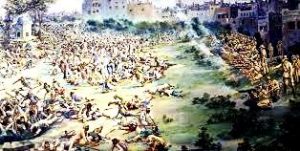
 Prof. Satya Narayan Misra in Bhubaneswar, April 19, 2026: The genocide of innocents at Amritsar took place this month 107 years back, when Colonel Reginald Dyer ordered firing at a crowd consisting of Sikhs, Muslims and Hindus, estimated at between 5000–30,000, which had congregated to celebrate Baisakhi, the Sikh New Year. Dyer had not given any advanced warning when the fire was opened. His personal bodyguard Sergeant Anderson later noted that the crowd “seemed to sink with the ground, with a whole flutter of white garments. The firing squad of 50 fired exactly 1650 rounds non-stop for about 10 minutes until the entire crowd had fled or fallen.
The wall still bears testimony of the bullet holes. This dastardly act, which still brings a feeling of revulsion to every tourist that visits this monument, was enquired into by the Hunter judicial enquiry committee in October, 1919. It had five British members and three Indians, including the eminent jurist C.Setalvad. The Committee reported that 379 people were killed and upto 1200 wounded. Richard Attenborough’s famous biopic of Mahatma Gandhi has a highly emotive and largely fictional scene of the massacre. The reality is far more banal and heart renting.
The Empire of Fear
Kim A. Wagner’s book “The Empire of Fear and the Making of a Massacre” (2019) is far more poignant and fills up a critical void in understanding conflicting perspective of this great human tragedy during the British rule. PercevalSpear, the historian, observes that “Jallianwala Bagh was a scar drawn across Indo-British relationship deeper than any which had been inflicted since the mutiny of 1857. It became a remarkable signpost towards Indian Independence”.
 A reflection of what precipitated this massacre would be in order. After annexation of Punjab by the British in the Anglo-Sikh war of 1849, Punjab had been broadly quiescent and even loyal to the imperialist master. However Punjab of 1919 was different. It had become a place of widespread agrarian unrestcaused by monsoon failures, foodscarcity and high prices, to which WW1 added its own pressure. The Rowlatt Act (1919) was a major petard to this, as it was carefully calibrated to punish the extremists while rewarding the moderates. Its prime target was Mahatma Gandhi who had made hartal, as a major weapon against the British.
.
The Turning Point
On April 10th, a peaceful Gandhian Hartal turned violent with an angry mob rampaging through the city. The town hall was set on fire and its telegraph office looted. The National Bank and the Alliance Bank were also looted and the Managers set on fire. The most emotive attack was on Ms. Marcella Sherwood, the 45 year old Superintendent of the City Missions who was cycling into the city alone to close down the five schools she managed.
She wanted hundreds of students in her charge to go home safely. She was stripped naked and mercilessly beaten by a group of men and left her where they thought she was dead. She was taken to the Fort where she hovered between life and death. One of Ms. Sherwood’s first visitors was Rex Dyer who had moved to Amritsar to help to restore order in the city.
On April 13th Dyer marched his troops with their armoured cars through the city prohibiting gathering of more than eight people. It is doubtful whether the ban was widely published. The Manual of Military Law required the issue of a formal warning before opening fire on civilian rioters and the use of minimum force, if possible, only firing in the air. But Dyer conducted the shooting as a military operation againstenemy troops, reasoning that he was the one under attack.
During his prolonged examination by the Hunter Committee he said, that he would have probably used the machine guns, if he could have squeezed his armoured cars into the bagh! It was this unrepentant attitude that exasperated even Dyer’s firm supporter, Lt. Governor O’ Dyer who thought his assertions at the enquiry were ‘indefensible’. O’Dyer stopped the crawling order which was given by Brigadier-General Dyer for any Indian crossing the alleyway, where Ms. Sherwood had been brutally assaulted.
The Perception of the Massacre
Brigadier-General Dyer’s action came for discussion before the House of Commons on 8th July, 1920 where the resolution of censure was upheld by 230 – 179 votes. It was Churchill’s speech that tilted the scale against him when he said “it was a monstrous event, an event which stands in singular and sinister isolation”.
On the other hand, the House of Lords took a different view that the House of Commons was unjust to the Officer. The Morning Post launched a patriotic drive for funds for benefit of Dyer, portraying him as a victim. More than 26,000 pounds were raised. The butcher of Amritsar was given a full military funeral in 1927. Among the flowers was a wreath from Rudyard Kipling with a message “he did his duty as saw it”! Kipling was not alone in this adulation.
Three days after the massacre Dyer was invited to the Golden Temple and offered a Sharopa. A shrine was also built at another Sikh holy place, Guru Sat Sultani. Most of the Anglo-Indian Community saw him as the ‘saviour of Punjab’.
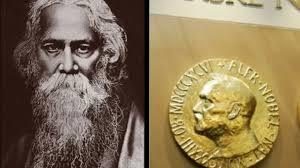 On the nationalist side the Nobel Prize winner Rabindra Nath Tagore returned his knighthood in protest. He wrote “The time has come when badges of honour make our shame glaring in their incongruous context of humiliation”. Gandhi also returned the medals awarded for his war time services. The massacre had the unintended consequence of catapulting Gandhi to unrivalled leadership of the Congress, side lining moderates C.R.Das and Moti Lal Nehru.
The Unhealed Scars of History
David Cameroon, the British Prime Minister, visited Jallianwala Bagh in 2013 and wrote an apologetic message: “This was a deeply shameful event in the history of the British”. Amritsar’s tragedy of 1919 needs to be understood as the dying gasp of an imperialist ideology. It is difficult to say whether the massacre was the work of an isolated bigot or a reflection racism that one associates with imperialism. The Rowlatt Act was quietly repealed in March 1922. The British never used fire power on the civilian mob thereafter; even at the height of partition riots in 1947 in which Punjab witnessed the worst possible carnage. Ms. Sherwood, a victim of the 1919 riot, participated as a volunteer amongst the refugees.
Wagner writes “we are not responsible for the past; we are responsible for how we choose to remember or forget the past. And perhaps there are wounds that we should not attempt to heal.” Violence has no place in a civilized society as Gandhi had always reminded the world. The scars of history can never be erased; nor unprovoked savagery against the innocent! The following lines by Subhadra Kumari Chauhan captures the poignancy of JallianwalaBagh:
Alas! This lovely garden is drenched in blood
Come spring, dear king of seasons, but come quietly
This is a mourning place, so make no noise.
,



Leave a Reply
Be the First to Comment!