
 By Satya Narayan Misra* in Bhubaneswar, March 29, 2026: We live in a box of space and time. And movies are like windows in its walls. It is like a democracy in the darkness, with an image frozen in time. History, horror, humour, friendship, love and sacrifice, survival, and self-discovery, justice and morality form its leitmotif. And complex human relationship, that some of the films try to explore provide us a unique window torelate, reflect, ruminate and often revel.
De Sicaw on his international spurs with Bicycle Thieves in 1948. Ray followed him with his Aputriology in the 50s. Ingmar Bergman’s Fanny & Alexander released in 1982 show cased a sweeping family drama, with magic and stunning visuals. In present time, Jonathan Trier, brings back those magic memories. His breath-taking family drama “Sentimental Value”, which won the Grand Prix at the 2025, a first time for a Belgian filmmaker, reminds Bergman at his verdant best and of Satyajit Ray debuted with the Apu trilogy in the 50s, Trier did the same with the Oslo trilogy; Reprise (1986) , Oslp, August 31st (2011) and The Worst Person in the World (2021) whose exploration of modern relationships resonated with the audience and won Reinsve the Best actress award in Cannes film festival.
Sentimental Value
The plot centres around an ageing and egomaniac film director and estranged father attempting to reconnect with his two grown up daughters.To placate Nora, a famous stage actor, suffering from anxiety, Gusav, the father, begs her to take the lead role of her own grandmother, to revive his flagging career. Only to be angrily refused. It’s a film built on truth, performance and unresolved family lore, with Trier showcasing his mastery of emotional damage. The performances are excellent across the board. There has rarely been a film in which family dynamic is more genuinely defined than in this one. Brian Tallerico writes: “You need to live to make great art. And you need great art to live”.
A bouquet of three Sentimental Films
As one scours through the landmine of human relationship on celluloid in the recent times , one is struck by three 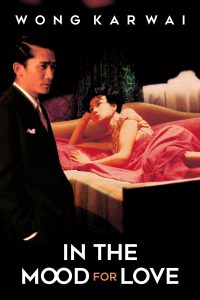 films ‘ In the Mood for Love’(2000) , an iconic film made by Wong Kar-wai from Hong Kong , ‘Aftersun’(2022) , a poignant film made by Charlotte Wells, a Scottish film maker and ‘Close’ (2022), a powerful exploration of adolescent friendship and grief. The Mood for Love is set in a dreamy, impressionistic evocation of Hong Kong in 1962, where Leung and Cheung have rented rooms next to each other fall in love while trying to deal with the infidelities of their respective spouses, whom they discover are involved with each other. What is unusual in a film about adultery is that we only see the wronged couple and the romance of their unconsummated love and not of the adulterers.It’s a mood piece with nostalgic music in the background.
‘After Sun’ (2022) traverses a different terrain, where the focus is on 11 year old Sophie, and her treasured trip to a fading resort in Turkey with loving but estranged and deeply troubled father Calum. It is characterised by a texture that feels like a real, hazy memory. Its poignant portrayal of father daughter bond, memories that shape our understanding of loved ones and Sophie’s journey in a relatable and heart-warming exploration of adolescence.
‘Close’ directed by Lukas Dhont is a deeply emotional Belgian drama about the intense friendship between two 13-year-oldboys, Leo and Remi, torn apart by adolescent insecurity and bullying. The film uses vibrant colours (flowerfields) to contrast with the emotional damage, relying on visual story telling rather than dialogue. For Remi, Leo’s sudden decision to break up with him has the same effect as his mother deciding to put him up for adoption. There is no doubting the force of this squelching sad story. No wonder, it received a 10-minute standing ovation at Cannes film festival.
Movies as a Mirror
As the OTT platforms showcase a bewildering range of movies, the Television sets on our walls and not cinema halls have become our gate away for movies. But to parse what is good quality is a herculean effort. As Roger Ebert in his seminal book “The Greatest Movies” writes: “It’s never easy to make a definitive list of must see movies, since it will always be subjective.” All the same, many of them tug at our hearts and leave an indelible imprint.
Moving away from the genre of horrors & thrillers to slow, meandering human stories cut the cord of time and space. De Sica’s Bicycle Thief made in 1948 is as well entrenched as a masterpiece that one realizes that it is still alive and has the freshness of a jasmine flower. The film is still as poignant today as when it was made because it contains one of the most believable portrayals of father son relation. Satyajit Ray who made Pather Panchali seven years later is still a poignant coming of age family story set in rural Bengal and timeless. While many holocaust movies have been made, Spielberg’s Schindler’s List made in 1993, gives information about how parts of holocaust operated, but does not explain it, because it is inexplicable that men could practice such genocide.
 Religion and race is marker that we use. The power of Spielberg’s film is that it does not explain evil, it insists that men can be good in the face of it, and that good can prevail. Watching the wanton violence being perpetrated by Jews against innocent children in Gaza and US missile striking a primary school in Minab, Iran killing 175 , mostly children, seems to show that the past victims of genocide can be perpetrators now.
Cinema is both a mirror to our past, present and a guide for the future. The direction that we decide to take is beyond the power and craft of these brilliant directors. They can at the best influence us and stir our conscience in these fractured times, to be more empathetic, reflective and compassionate.
Satya Misra was closely involved with the NSD in the 70s



Leave a Reply
Be the First to Comment!