
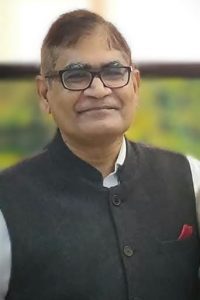
 Prof. Satya Narayan Misra* in Bhubaneswar, March 10, 2026: The seeds of the international women’s Day were sowed on 8th March 1911 when women demanded right to vote, to hold public office and get protection against sexual discrimination. Since then the leitmotif of the movement has expanded to include right to equal pay, equal rights with marriage, reproductive rights and protection from rape, sexual harassment and domestic violence. While many of these demands have been statutorily and constitutionally mandated, equal pay for equal work, domestic violence pervade in most parts of the world and the economic and political empowerment of women lag significantly behind men, even in developed countries.
Equal Pay for Equal Work
On 20th September 1973 at the Houston Astrodome, a 29-year-old Billie Jean King defeated 55-year-old self-proclaimed male chauvinist and former tennis champion Bobby Riggs in straight sets. Watched by 90 million viewers worldwide, this $1 million winner take all match became a cultural phenomenon that boosted equality for women in sports.
Barrack Obama, the former President of USA was one of them who watched this match. “I saw that match when I was 12. I have two daughters and it has made the difference in how I raise them”, he wrote. For Billie Jean King, ‘it was not about tennis; its about history and social change.’ While in Wimbledon has been a pioneer in offering equal prize money to men and women’s singles players since 2007, there is considerable pay disparity in most countries. In India, where over 60% women work in the informal sector, pay disparities are stark and legal protection is limited
Sexual harassment in workplace
 This has been a recurrent refrain in many countries. Women broke silence by exposing sexual assault and harassment by people in powerful position, earning the sobriquet of Silence Breakers & winning accolades as Time Persons of The year (2017).India has its unique story in this regard in Vishakhavs State of Rajasthan 1997 when a low caste social worker, Bhanwari Devi, who was gang raped raised her voice against the age old pernicious practice of child marriage. Showing unusual alacrity & sensitivity the Supreme Court issued guidelines to pre-empt sexual harassment in work place.
The guidelines have now become an Act (2013) by expanding the scope from office space to nursing homes, sports complexes, and educational institutions. Section 375 of IPC has also been amplified the scope to include acid attack, voyeurism and stalking in the ambit of rape. The Supreme Court has also struck down exception 2 of Section 375 of IPC which condoned sex with married girls under the age of 18 as not being rape. All these historic legal landmarks have feet of clay, as ILO reports how there is poor compliance of the Acts by the employers. The rape & murder in RG Kar Medical College, Kokotta in 2024 is still fresh in memory
The Women Crusaders
Prominent amongst them are Ms. Sheela Barse, Olga Tellis (1980s) through their PILs. Sheela Barse championed the cause of under trial women convicts, who were often victims of police brutality and the plight of children in lock ups. In the Sheela Barsevs State of Maharashtra (1983) Case the Supreme Court directed the states to have separate police lock ups for women convicts and women constables to oversee them. As regards imprisonment of children the Court observed in 1986 that “If a child is a national asset, it’s the duty of the state that they are not kept in jail. Incarceration in jail would have the effect of dwarfing development of the child and coercing his conscience and alienating him from the society”.
Olga Tellis, in 1985 fought for right to livelihood for slum dwellers in Mumbai when they were being evicted without notice under Section 314 of the BMC Act. The court upheld her prayer that right to livelihood and shelter are an inalienable part of Right to Life under Article 21 of the Constitution. It also directed that “the slums, wherever they are situated will not be removed until one month after the end of the monsoon”. This landmark case has set the tone of socio economic rights of the pavement dwellers beyond their political right to vote.
Marital Rape As a Crime
Justice Leela Seth in her book ‘Talking of Justice’ recounts how the Justice Varma Commission strongly recommended marital rape to be treated as a crime. She writes: “Mostly men make laws, and men said it would spoil marriage. It enables a wife raped by drunken husband not to reach out to police “.
The NFHS V (2019-2021) brings out how 70% of women whose husbands got drunk experienced sexual violence as against 23% of husbands who were not drunk. 90% of the victims did not seek help fromany one due to PTSD, fear and loss of self esteem. England enacted against it in 1991 and South Africa in 2007. Marriage must not extinguish the sexual autonomy of the wife, writes Sandra Friedman. Marriage is a partnership of equals and the wife is not a subservient chattel of the husband. Around 150 countries have criminalized marital rape & India is an outlier.
Taking Sock
 The International Women’s Day has come a long way from its socialist moorings in early twentieth century for defending rights of women workers, to the reproductive & personal rights for women. Gloria Steinem made the movement strident by stating: “If men could get pregnant, abortion would be a sacrament”. The US Supreme Court in Roe vs Wade Case (1973) endorsed women’s right to have an abortion. The Indian Supreme Court has also held similar views. The poor women must have proper reproductive care and the girl child provided adequate nutrition when they grow up. More than 50% of adolescent girls suffer from anaemia, as per NFHS V report.
Anaemia Mukt Bharat has remained a mirage as significant reduction in MMR and anaemia is not happening It is high time that marital rape is treated as a crime in India. This requires political will, priority and consensus, beyond tokenism like gender budgeting. The Women’s Day must not be a platform to label men as adversaries but as responsible partners in their joint quest for equality and social justice.
*The author is a Professor Emeritus & teaches Constitutional law
E.mail-misra.sn54@gmail.com, Ph-91-7381109899



Leave a Reply
Be the First to Comment!