
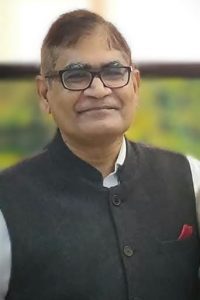
 Professor Satya Narayan Misra in Bhubaneswar, February 3, 2026: The Preamble to the Constitution promises to secure to citizens ‘liberty of expression ‘and Article 19(1) (a) guarantees that as a fundamental right. However, such freedom of expression is subject to reasonable restriction of Article 19(2), which includes national security.
When in dispute, the Supreme Court conducts a ‘proportionality test’ the reasonability of such restrictions. Further, Article 22 provides for preventive detention where the role of the Supreme Court is often subject to debate as an impartial arbiter to defend fundamental rights.
The refusal of bail to Umar Khalid &Sharjeel Imam after five years of incarceration has raised a debate on Article 22 and detention laws like UAPA 1967. Former CJI Chandrachud has fired the latest salvo where he said that ‘national security law has turned the basic principle of bail on their head’ and that national security cannot be a subterfuge ‘to end the process of judicial review’. It may be recalled that in his lone dissent in the ADM Jabalpur Case (1976), Justice HR Khanna had famously observed “Detention without trial is an anathema to all those who love personal liberty.”
Article 22 as Authoritarian Enclave
The history of preventive detention as a tool of colonial repression brought up a sharp debate in the Constituent assembly with Sardar Patel pitching for strong executive powers for national security while Mr HV Kamath pleaded for strong individual protection. Finally, the authoritarian enclave of preventive detention was incorporated in Article 22(3) & (4) which provided for such detention without trial for a period of 3 months if a person who isconsidered enemy alien or attract Preventive Detention Law.
Beyond three months, an advisory board with members who qualify as HC judge, can approve suchextension for a maximum period stipulated by the Parliament. Article 22(7) empowered the Parliament to prescribe circumstances in which a person can be detained beyond three months without opinion of an advisory board. This Janus faced provision incorporated elements of due process, and then excluding them from the scope of preventive detention laws.
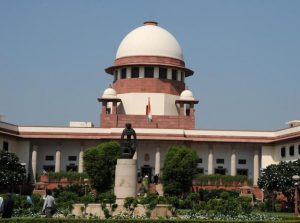 Slugfests in the Supreme Court – AK Gopalan Case (1950)
Gopalan, a communist leader was arrested in 1950 under Preventive Detention Act 1950, which was framed keeping in view the Telengana disturbances and recurrent labour troubles. Gopalan’s contention was that the Act took away thebasic requirements – that of proving a notice, a hearing, an impartial tribunal and a just procedure. It also violated rights to free speech and right to freedom of movement under Article 19. A majority of four judges rejected both the arguments.
Justice Fazal Ali dissented, contending that “The rights between rights and public good can be struck only if a person deprived of liberty is allowed a free chance to establish innocence “. He also observed that PDA was a direct infringement of right to movement under Article 19(10 (d). Thirty-eight years later, the Supreme Court in Maneka Gandhi Case decreed that the procedure has to be just, fair and reasonable. Secondly, it concluded thatthe threearticles, 19, 21 & 22, are not to be read in isolation but as an interconnected whole.
AK Roy Case (1981)
Five years later, these questions came up squarely in AK Roy Vs UPI Case, where the constitutionality of the National Security Act of 1980 was challenged. The Supreme Court upheld the constitutionality and puts in its backburner its judgement in Maneka Gandhi Case. AK Roy is an inflexion point judgement in the sense that the court has consistently refused to subject preventive detention to the test of proportionality, even as this test has become the litmus test of judicial review of reasonable restrictions under Article 19(2) imposed by the state to snuff out various types of freedom envisaged at Article 19(1).
Delhi Riot Case
The present case involves protests against CAA Act & the Delhi riots that followed in 2020, killing more than 50 people. While all protestors were released, the Supreme Court refused to give bail to two JNU research scholars, Umar Khalid & Sarjeel Imam, as the two judges felt that they conceptualised or orchestrated the riots and their cases were qualitatively on a different footing. The judges concluded that the court does not conceive of liberty in isolation. When bail is sought in proceedings sanctioned by a special statute, the court is required tomake ‘an onerous and sensitive balancing exercise that neither liberty nor security admits of any absolutism’.
The specific provision of UAPA (1967) invoked was, S 43 D( 5) which allows the court to form an opinion on perusal of case diary that ’reasonable ground for believing that the accused against such a person is ‘prima facie’ exists . The judges noted that though the period of incarceration is substantial, continued detention has not crossed the threshold of constitutional impermissibility. In the intersection of personal liberty and collective security, the judges have gone by ‘prima facie’ truth as peddled by the police.
The Issues at stake
 The entire edifice of criminal jurisprudence rests on the presumption of innocence until proven guilty. Bail is normally to be granted unless there is an apprehension of the accused absconding or he can tamper with the evidence. The preventive detention acts are clearly subject to the rigorous proportionality test adopted by the court for judicial review.
The present judgement clearly upends the due process decision of the court in the Maneka Gandhi (1978) and the dissenting note of Justice Khanna in 1976 regarding right to life even during imposition of emergency, which was subsequently upheld by a full bench in the Puttaswamy Case (2017).
Prolonged incarceration without trial is a negation of right to life. Ironically the two judges believe that five years without trial is constitutionally permissible. After the Keshavand Bharati verdict enunciating the basic structure doctrine, Mr Upendra Buxi, the famous jurist, called the Supreme Court of India as the Supreme Court for Indians. In the crossroads between liberty and preventive detention, the court seemed to have erred on the side of overzealous state and equality before law for all citizens glossed over. As the Republic turned 76, the preventive detention laws like UAPA and NSA needs denovo examination by a Constitution bench to pre-empt near unchecked exercise of state power over the individual.
Professor Misra teaches Constitutional Law



Leave a Reply
Be the First to Comment!