
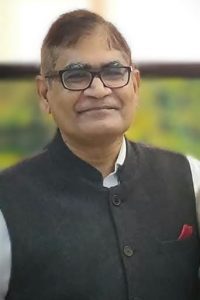
 By Professor Satya Narayan Misra* in Bhubaneswar, December 7, 2025: ‘Where you stand depends on where you sit’, an aphorism used in politics, is equally applicable to geopolitics. Where India sits is the single most determinant of her options on the world stage, where the unipolar dominance of the USA in the last two decades has given way to a bipolar challenge of China & Russia, counterbalancing the Western hegemony.
The de-hyphenated foreign policy which BJP has been pursuing over the last decade has been subject of swirling debate and muted approbation. There is, however, little doubt that the current regime has been successful in embedding a perception of a powerful India as the fastest growing country. Given US–Russia covert understanding on Ukraine and softening of stance in trade between USA & China lately, India’s mega defence deals with both USA & Russia , post 2005, India’s defence policy options, in the backdrop of the recent Modi-Putin summit needs close look.
Defence Deals: The Changing Paradigm India signed the Indo Soviet Strategic agreement with Russia in 1971, spawning a large number of technology transfer followed by production in India like T 90 tanks, Su 30 fighter aircrafts. From a predominantly hyphenated defence acquisition with Russia, India started buying a number of UAVs from Israel in 2002 and followed it with a megadeal in 2004 for Falcon Airborne Warning & Control System (AWACS) at $1.1 billion.
The honeymoon in defence deals with USA started n 2005, with a new framework for US India Defence Relations. India’s procurement system also evinced a new yen for competitive tendering and transparent procurement process as evidenced by promulgation of Defence Procurement Procedure (DPP -2005). In this new scheme of acquisition Inter Governmental Agreements (IGA) with strategic partners was the exception rather than the norm.
Major Defence Deals with USA: India went in for mega defence buys from USA like C130 J Hercules transport aircrafts in 2008 for $1 billion, P 81 Poseidon maritime patrol aircraft for $2.1 billion, C-17 Globe master heavy transport aircrafts for $5 billion. The Services showed a clear predilection for American surveillance and transport aircrafts over their earlier acquisition from Russia of these systems.
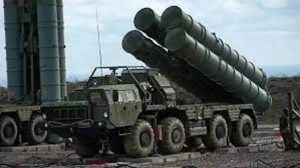 This had understandably upset our Russian partners, who clearly sensed a tilt of India towards the USA. Modi government’s procurement of S-400 air defence systems in 2018 for $5.4 billion was clearly a watershed moment to repulse that perception. It also gave credence to our strategic autonomy in the choice we make about the platforms and the country we source from.
Putin Modi Summit – Putin’s present visit to India is predicated on three themes, increasing bilateral trade from the existing $69 billion to $100 billion by 2030, ensuring energy security and bolstering defence cooperation. India will buy S-400 for more squadrons and could buy S-500, which has a longer range and operate at higher altitude than S-400, setting up production base of S-400 at India. Under the aegis of Make in India program, joint production of spares for Russian aircrafts & platforms is also mooted.
But the deal in which both USA and Russia are keenly competing with each other is in the area of stealth aircrafts. While Russia is peddling for SU 57, Trump is up with F35. For the first time Trump is also willing to share technology for critical sub systems with India, unlike Russia who have been the most durable and reliable technology transferring country for Mig aircrafts, SU 30, T72 & T 90 tanks, frigates, submarines and cruise missiles in the past.
It would be interesting to compare SU 57 with F35 stealth aircrafts.
Comparative Features of SU 57 & F35
Feature SU57 F35
Stealth Capability Good Excellent
Speed Mac2 Mac1.8
Maneuverability High High
Unit Cost $35-50M $80-100M
No Produced 20 600
India signed a Preliminary design contract with Russia for a Fifth Generation Fighter Aircraft in 2010. The project was shelved in 2018 due to concerns over SU57 stealth capability. Russia has made new offer to revive the project, including technology transfer and joint production. As would be seen from the above table F 35 has superior stealth capability. But the cost is nearly twice the Russian cost. Its therefore the political choice that Mr Modi makes becomes critical
The Conundrum
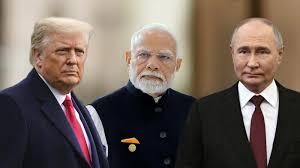 Quite clearly India is miffed with the intransigent stand USA has taken visa vis India in the matter of tariff and trying to arm twist India’s energy options with Russia. In fact, India is dealing with Trump & Putin, who have taken unilateral bellicosity to a different level. India has to contend with the fact that a ‘ring of fire’ is engulfing India with Bangladesh showing friendliness with Pakistan and China is Bangladesh’s largest trading partner, with bilateral trade exceeding $10 billion. China is investing heavily in Bangladesh’s infrastructure, including ports and power plants. Bangladesh has a major stake in China’s Belt & Road initiative (BRI). India would not like to accept a subordinate positon in China led power hierarchy.
Given USA’s past record in sending seventh fleet to intimidate India in its war against Pakistan in 1971, and its transactional approach with Russia and China, it makes eminent sense that Mr Modi shows greater reliance on economic and strategic partnership with Russia, given their track record of standing by India, whenever it is up against an adversary like Pakistan.
Concluding Thoughts
Barring the Israelis and the Russians, the Americans have been very mercurial and unreasonable with India under Trump, when confronted with serious external challenge. India should seek close partnership with Europe and clinch the FTA with EU, on the same lines as UK. India can ill afford to have confrontation with USA. As for its neighbours, it must try to convert the ‘ring of fire’ engulfing it to a ‘circle of trust’; and lean on trusted strategic and reliable partners like Russia and Israel.
India’s nonalignment policy has now transmuted in to multi alignment, and hyphenated foreign policy has now become de-hyphenated. But in this quest for open policy option, the lessons of the past must not be glossed over. Modi & Putin walk on a tight rope in the area of defence acquisition.
*Professor Satya Narayan Misra was Joint Secretary (HAL) in the Ministry of Defence with close involvement in defence cooperation talks with Russia. Views are personal.


Leave a Reply
Be the First to Comment!