
 By Satya Narayan Misra* in Bhubaneswar, April 13, 2026: Asha came to the music scene in the 50s, when Lata, Geet Dutt & Shamshad Begum were the top three. Growing under the shadow of Lata, her main rival, however, was Geeta Dutt. It was her association with O P Nayaar, who did not like Lata’s thin voice that she bridged the gap with the song Aaiye Meherbanin Howrah Bridge made in 1958.
A year earlier, she paired with Rafi in Naya Daur, with lilting numbers like Maang Ke Saath Thuma, Saathi Haath Badhana & Ude Jab, Jab ZulfeTere. The association with OP Nayaar culminated in the haunting number Yeh Hai Reshmi Zulfoki Andhere in Mere Sanam in 1965 before they parted company in 1974. Yeh Reshmi oozed modernity, swing and attitude to singing of Asha, a far cry from the staid, lyrical numbers being peddled around that time. However, her association with RD Burman and her song Dum Maro Dum in HareRam Hare Krishna in 1971 broke the glass ceiling of Hindi film music. Asha made the chillum smoking Zeenat Aman sound unapologetically sensuous.
Breaking the Glass Ceiling
Lata was to originally sing Dum Maro Dum. But RD put his foot down & brought Asha in. When Dev Anand heard it, he developed cold feet as he thought that it will swamp other songs in the film. It was only when Asha pleaded with him, he relented. The rest is history.Given its carefree, anti-establishment refrain, AIR banned it; Doordarshan cut it, as it was apprehended it will corrupt the youth. However, Ameen Sayani carried it in Binaca Geet Mala where it remained No1 for 12 consecutive weeks, becoming SartajGeet . When Apple launched I phone 13, Dum Maro Dum was its opening guitar riff. It played in the background in the highly popular movie Durandar in 2025. By common consent, she sang better than what Lata would have & made an anthem for the youth.
Asha with the Burmans
With RD Burman in consort they introduced rock, jazz & Western Cabaret to Hindi cinema in the 70s. Quick on the heels of Dum MaroDum, Asha sang another iconic rock number Piyatu Abto Aja in the movie Caravan. She followed it with a soulful romantic number Churaliya Re in Yadoon Ki Barat in 1973. In 1980 she sang a lovely number ‘PiyaBawri’, composed by Gulzar for Rekha in Khubsoorat. But the film that defined the best of Asha-RD –Gulzar combine is Inaja, adapted from the Bengali film Jatagriha. A forlorn wife, played with rare sensitivity and dignity by Rekha, Asha’s rendering of ‘Khali Haath Sham Ayi’ takes one’s breathe away.
 Even better is the number ‘Mera Kuch Saman Tumari Pas Padi Hai’, which is both minimalistic and haunting. It broke conventionalsong structure and brought sublime musicality to a strikingly conversational lyric of Gulzar. Asha met R D fortuitously in S D Burman’s house, where Burman Da because of a misunderstanding with Lata asked Asha to sing that superb song ‘Kali Ghata Chaye ‘for Nutan in the film Sujata (1959). Asha again sang a haunting number ‘Ab Ke Baras Bhej Bhaiya’ in Bandini (1963). It was a perfect melodic partnership, prompting Burman Da to observe ‘Asha’s voice is no less sweet than Lata’.
Asha’s Musical Crescendo
But the greatest singer–composer partnership was Umrao Jaan directed by Muzzafar Ali in 1981, based the story of a Lucknow courtesan, Asha was to sing one song with Lata to sing the rest. However, Muzzafar Ali felt it would be too much like Pakeezah made in 1972, with similar story of a Lucknow courtesan.When Asha read the novel, she fell for it. But she found in Khayyam, a very difficult composer, who would not let her sing in her usual high octane but drop her pitch by 1.5 scale, ‘lower sur’.
It was pure rendering of rare Ghazals penned by Shahryar. The songs of Umrao Jaan were pure magic. Dil Cheez Kya Hai was based on Raga Bihag, ‘In Ankhnoki Masti’ was based on Bhupali Yeh Jaga hai Dosto, on Bihag and Zustuju Jiski Thi on raga Yaman Kalyan. Both Pakeezah and Umrao Jan are gold standard courtesan films. While Lata rendered lilting numbers like Chalte Chalte and Thade Rahio with heavy classical base, Asha fared no less in the raga based Gazhals of Umrao Jaan under the exacting watch of Khayaam.
No wonder, the troika of Rekha, Khayam and Asha won the National award in 1981 for best actor, composer and singer. In Umrao Jaan Asha lingered like Ittar on a silk dupatta. Music was sparse, unhindered, and almost fragile. Asha stepped in not as a singer chasing notes but as a mehfil holding back line. This was not her usual space, no playfulness, no cabaret sparkle. Just Tehzeeb, add and a quite heartbreak that never announces itself. With Asha some of the voices entertain, some voices seduce, but with Umrao Jaan, her voice becomes poetry.
Lata & Asha as Pillars of Culture
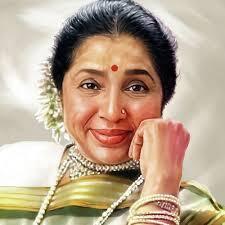
In 1984, she sang with Ghulam Ali an unforgettable ghazal ’Dargar-e Dil Ki Raat Mein, Charag Sa Jab Gaya’ (In the night of the heart’s court yard, someone lit a lamp’). In public appearance Asha cultivated a distinct style, embellished silk sarees, bold bindis and statement jewellery, standing in visual contrast to her sister’s austere simplicity. Her power lay not just in her prolific output but on her insistence on being seen and heard on her own terms.Serendipitously, both the icons passed away at the same age.
 Both of them had very solid grooming in classical music under the watchful eyes of their father. More than any other singer, their solid rootedness in classical music showed, beyond the fluff and light heartedness of popular music. Bade Ghulam Ali Khan used to say that if classical music had been taught in each household, India would not have been partitioned. The heartfelt tribute of Ghulam Ali on Asha Tai’s passing away is a vindication of that message.
*Satya Misra is a film& music buff



Leave a Reply
Be the First to Comment!