
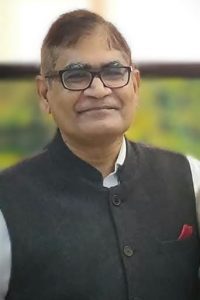
 Professor Satya Narayan Misra* in Bhubaneswar, March 6, 2026: The Defence Acquisition Council has given in principle approval for procuring 114 Rafael Multi-Role Fighter Aircraft, with 96 jets being manufactured in India, with 18 being bought in fly-away condition. This $40 billion, biggest ever deal will significantly enhance the capability of undertaking air dominance roles across the spectrum of conflict and significantly boost the deterrence capabilities of the Indian Air Force (IAF), with long-range offensive.
The one which will be manufactured in India will have an indigenous content of 50%-60%. This deal close on heels of the earlier direct acquisition of 36 Rafael aircrafts in 2015 by scrapping the earlier Buy & Make contract for 126 Medium Multi Role Combat aircrafts from the same company at an estimated cost of $10-$12B , turning upside down the precedence of Buy & Make over Buy (Global) .
The 2015 deal followed the Inter Government Agreement (IGA) route, which eschews competition. The upcoming $40 B deal, apart from increasing the cost of the total deal from $10 B to $40 B, has again skirted competition, blighted India’s global perception of being a transparent buyer and deprived India of a possibility of getting greater range and depth in technology and bolstering India’s indigenous capability in critical subsystems like propulsion, weapons and sensors.
Our Low Self Reliance Index in Critical Defence Systems
 According to the SIPRI report (2025), India was the world’s second largest arms importer from 2020-2024, with Russia as the largest source of supply (38%). Dr APJ Abdul Kalam, who helmed the DRDO was the Chairman of the Self Reliance Index Committee which assessed SRI at 30% in 1993 and set a road map of improving it to 70% by 2005 by not only investing more in facilities but also have Joint Ventures with reputed OEMs and Design & Development collaboration with well-known design houses globally & India’s strategic partners like Russia & Israel.
As the father of our IGMDP program, with success stories like Prithvi, Akas & Agni, he also finalised the Joint Venture initiative with Russia for Brahmos cruise missiles. They have not only been productionised but have become a powerful arsenal in destroying Pakistan airbases during OP Sindoor.
The Kalam Committee had, in particular, harped on investing greater attention to critical technologies like stealth, AESA radars, passive seekers, Focal Plane array, gas turbine engines, smart weapons & munition, carbon fibres, GPS, where our dependence was nearly 90%. India’s capability in coming up with these subsystems still remain dodgy despite the hype about Make in India in the Modi dispensation.
The Acquisition Process
The Services have Long term, Short term & Annual Acquisition Plans. After categorisation of a system has been decided, Buy, Buy & Make &Make, with Buy Indian Design Development Manufacture- (IDDM) getting highest priority, the SQRs are formulated by the Services. After the RFP is floated based on the SQRs of respective service, the services conduct TEC and Field trials to shortlist the eligible vendors.
This is an elaborate time consuming process, with trials conducted in plains, high altitude and desert areas under different ambient conditions. The CNC conducts price & commercial negotiation with lowest tenderer. Where technology transfer is envisaged, the thrust is work out the range and depth of technology. Most of the OEMs are extremely chary of parting with critical technology like FPA, passive seekers and AESA radars.
The IGA Route
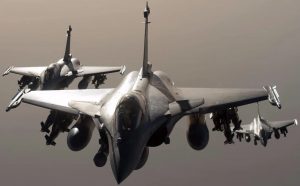 The Defence Acquisition Procedure provides for Inter Government Agreement (IGA) with specified country for geo strategic reasons, technology, military & political benefits. Most of the deals with Russia fall within this category. The Rafael deal for 36 aircrafts in 2015 followed this route instead of Rafael competing with Euro Fighter Typhoon which was shortlisted for Buy & Make proposal of MMRCA, which was dropped in favour of directly buying 36 under the IGA route in 2025. The subsequent order by Navy for 26 marine Rafael versions followed this route.
The upcoming proposal for procuring 114 Rafael aircrafts with 96 built in India with 50-60% indigenisation will follow the IGA route. The moment the government intends to opt for the IGA route, it stultifies competition and takes away the bargaining power on the price front.
As a matter of fact, the negotiation on the price front is severely limited. When India decided to renounce the ToT route of productionising MMRCA with Rafael, there was a genuine apprehension that cost of buying the same aircraft through the direct purchase route would be unreasonably high. More so, since an opportunity was not given to Eurofighter Typhoon, who were shortlisted in the field trials, to offer their most competitive price.
Rhetoric & Reality
A major welcome development under the Modi regime has been that the private sector is being treated as potential substitutes of Defence PSUs, who have over the years due to monopoly position to receive technology an integrate subsystems and have become indifferent to cost and time overruns and quality deficits. Associating private sector players like the Tatas in lieu of HAL in production of fuselages is welcome. In Navy, L& T has proved to be a credible producer of surveillance vessels like IPV &OPV, outcompeting defence PSUs like GSL.
However, systematic alienation of HAL will be ill advised as they have considerable experience in integration of subsystems due to long years of aircraft production. Ideally, Strategic partnership between major DPSU players and private players must be explored.
The troika of OEM – Public – Private sector players in the upcoming deals for Rafael must be assiduously pursued under the aegis of MoD. But as Kalam showed, it is through JVs with OEMs & Joint D&D with reputed design houses, we can transcend the critical void in critical technology, become manufacturing hubs in defence manufacturing.
The tendency to skip real Make in India and Buy & Make in favour of Buy (Global) by resorting to IGA has the potential of high cost and allegation of sleaze and corruption gets strengthened. It has upended the rhetoric of Make in India and made India a major buyer of platforms and losing out on bolstering our indigenous capability in military manufacturing.
*Professor Misra was earlier Director, DRDO (1995-1999)& JS (HAL)(2006-2009) , Ministry of Defence . Presently, he is Professor Emeritus, Teaching Economics, Constitutional Law & Public Policy


Leave a Reply
Be the First to Comment!