
 By Dr. Raj Kishore Panda in Bhubaneswar, March 24, 2026: India is home to a vast array of annual festivals varying across regions and seasons. Over and above the major festivals such as Ganesh Chaturthi, Durga Puja, Diwali, Holi, Christmas, and Eid that are celebrated from early August to late November every year in a nation-wide scale, there are many more festivals celebrated in different regions on specific days annually.
No doubt these festivals reflect the rich cultural and religious traditions of our country and act as great unifying force fostering harmony among diverse communities, but along with this they serve as powerful engine of growth driving consumption, employment and regional development across the country. According to an estimate the festivals in India contribute around 9-10 percent of country’s GDP growth annually.
It is commonly known that India is largely a consumer economy. Private consumption alone accounts for around 62 percent of the country’s GDP. More so, with the country’s massive young and growing population we find consistent rise in demand for consumer goods. The growth momentum in consumption is seen very much visible during festive season as households loosen their purse-strings on a variety of consumer goods such as apparel, appliances, electronics, footwear etc.
Analyzing empirical data studies reveal that during festive seasons the Marginal Propensity to Consume (MPC) among the people increases 0.8 to 0.85 and this temporary surge in private consumption serves as stimuli that substantially influence aggregate demand, employment and ultimately the GDP of the country.
Driven by heightened consumption the festivals in India create millions of temporary and seasonal jobs in MSMEs and informal sectors. Employment in sectors such as retail trade, e-commerce, logistics, hospitality etc increases rapidly during festive seasons.NSS report shows that during festive seasons beginning with Ganesh Puja in September and ending with Diwali in November about 8-10 million additional jobs are created in sectors like retail trade, manufacturing, logistics etc. It is estimated that major festivals such as Durga Pujaand Diwali employ over 4-5 million people every year.
During festive seasons retail trade in the country grows massively. High surge in leading e-commerce platforms such as Amazon and Flipkart in recent years providing extensive on-line festive sales has heightened retail trade in the country. During festive seasons, in order to boost sales of their products companies producing apparel, the electronic goods, footwear, cosmetics etc give heavy concessions and freebies to consumers. As studies reveal smart phones remain the largest online category of commodities constituting around 20 percent of festive commerce during a year.
Local craftmanship is triggered during festivals. Regional skills get displayed during festivals. People having artistic skills in idol making, paintings, diya making, producing decorative items etc get employed and earn substantial amount during festive days. Local economies thus get stimulated and become resilient in supporting the growth of the national economy.
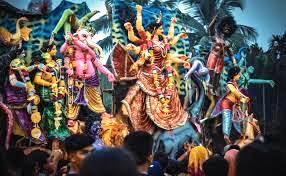 Festivals in India function as predictable economic cycles. As different festival dates are displayed in the annual calendar they shape demand structure and help in expanding production of those commodities in an orderly manner. Festivals like Akshaya Tritiya, Eid, Raksha Bandhan trigger sharp but differentiated demand leading to the pre-planned production of those commodities by the companies to meet the consumers’ demand.
India’s growth story cannot be limited to only macroeconomic indicators. Local economy needs to be resilient to boost national economy. Festivals serve as crucial triggers in stimulating local economy and making it a resilient ecosystem that powers broader national economic expansion. Festivals no longer remain just rituals. They become powerful economic multiplier driving job creation, boosting rural income leading to higher GDP growth.
Hence, they need to be supported to face the challenges of urbanity and modernity. The Government and local authorities should promote festivals to boost regional economies. The importance of festivals is noted when we see what Government policies often struggle to do, festivals achieve organically- stimulating demand, boosting consumption and creating jobs in the country.
• Formerly, Professor of Economics, Utkal University and Director NKC Centre for Development Studies, Bhubaneswar



Leave a Reply
Be the First to Comment!