
 Dr. Raj Kishore Panda* in Bhubaneswar, February 20, 2026: The Human Capital Theory developed by Theodore Schultz states that the most efficient path to development lies in the improvement in the country’s population and best ways to improve the population is through various forms of education and training. Recognizing the critical role of education the United Nations has included inclusive and equitable quality education for all as one of the goals to be achieved under sustainable development by 2030.
Thankfully in this year’s budget speech the Finance Minister while underlining three Kartavyas to be adhered to for achieving long-term and sustainable development of the Indian economy has announced for building people’s capacity partnering with India’s growth process. By way of specifying the above approach she intends to highlight government’s commitment on providing quality education for developing employability or capability among the youth.
In the light of the finance minister’s above approach making human factor a strong partner in the country’s development process the present article makes an overview of the state of education in India, particularly the school education which happens to be the foundational pillar for building human capital.
Originally education was placed in the State List of the Constitution. However, in 1976 it was moved to Concurrent List by the 42nd constitutional amendment with the objective of bringing uniformity in the education policy for the country as a whole and providing increased financial support to education sector. Thereafter we find increasing number of policies and programmes have been adopted by the central government to develop education in the country.
In recent years three important legislations have been enacted to make education inclusive and qualitative for all children between the age-group of 5-17 years. While Right to Education 2009 guarantees barrier-free access to education for all children between age-group of 6-14 years, the Right to Person with Disabilities Act 2016 mandates right-based empowerment for disabled children as a part of inclusive education.
 The National Education Policy 2020 emphasizes equity, inclusivity in education as a tool for social justice supporting the socially and economically disadvantaged children. In addition to the above Acts a number of schemes have been launched such as Mid-Day Meal Programme and Samagra Shiksha Abhiyan etc to increase children enrolment in the schools.
No doubt because of so many policy initiatives taken up by the Central Government, the school enrolment at the primary level has increased remarkably yet looking at the retention and dropout rates, the state of school education seems lacking in addressing the issues concerning the students. It fails in providing foundational capability needed for either carrier development or a decent job. Retention at the secondary and higher secondary levels reveals steady decline.
More than half the children enrolled at the primary level are found leaving schools at the higher secondary level. While at the primary level the Gross Enrolment Ratio is found to be more than 95 percent it declines steadily and becomes 89 percent at the upper-primary level (grades vi- viii) 56.7 percent at the secondary and higher secondary levels (UDISEPlus,2023-24).
Leaving aside the all-India aggregate picture of enrolment at the primary level which seems quite encouraging, across states we find a great deal of variation. In states like Bihar, Uttar Pradesh, Madhya Pradesh and Jharkhand the gross enrolment rates are much lower than the all-India average. Even in remote and tribal pockets gross enrolment rate remains deplorable. Enrollment of girls though increasing in recent years remains lower as compared to boys.
One major question that is often raised in the context of our school education system relates to its quality aspect motivating children to get admitted and complete schooling. Available data show that out-of-school children aged between 6-17 years are estimated to be 47.4 million in 2023-24 in the country (UDISE Plus data). It accounts for 16.8 percent of the total children in the said age group. This includes the drop out children which is found higher at the secondary and higher secondary levels at around 14 percent.
Contrary to the expectation, dropout rates do not showed finite relationship with level of development of states. While relatively better-off states like Karnataka, Gujarat, Haryana exhibit higher school dropout rates, poorer states like Odisha, Rajasthan and Madhya Pradesh show lower dropout rates than the all-India average. As studies reveal the factors influencing the dropout rates are many and broadly categorized under two heads viz; institutional and family-related.
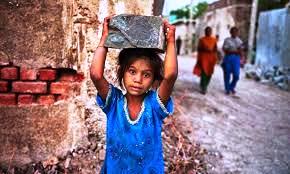 This necessitates area specific surveys to identify the problems for intervention. Child labour being widely prevalent in the country becomes a major factor for high dropout at the secondary and higher secondary levels. This suggests for stricter policies prohibiting child labour in the country. In this context socio-economically disadvantaged families need to be supported to discourage their children leaving the schools before completing the study.
Education according to Theodore Schultz is not consumption expenditure but a productive investment. Education does not yield benefits to the individual alone but to the society as a whole. Studies reveal that school education has a higher social rate of returns than higher education. This suggests for the government to make schooling more engaging and relevant.
No doubt the share of primary and secondary education in the governments’ (Centre and states together) budgeted allocation remains higher over the higher education yet in terms of absolute amount there is substantial disparities between states. Looking into the critical role of school education in building foundational literacy and numeracy among the children this level of education needs to be provided increased government attention- monetary and non-monetary. Along with enrolment retention needs to be focused to build a strongman-power critical to accelerated economic development.



Leave a Reply
Be the First to Comment!