
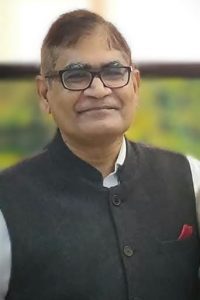
 By Professor Satya Narayan Misra in Bhubaneswar, February 21, 2026: Mr Naveen Patnaik, the longest serving and widely admired former Chief Minister of Odisha has pejoratively called the budget presented by the present CM Mohan Majhi as “full menu in an empty kitchen”. He was essentially alluding to the sharp spurt in borrowing by 47.5% in the budget 2026-27 as compared to the Revised Estimate for 2025-26.
This has somewhat dented the assessment of the Niti Ayog, calling Odisha, the healthiest in terms of Fiscal Health Index (FHI). But to be fair to Mr Majhi, this does not do justice to a budget, which is broadly in line with the broad architecture of Vikshit Odisha, inked last year. The budget has also taken a few major pointers from the Economic Survey, presented a day earlier. Its mixed bag demands objective analysis, transcending political bias and slugfest.
Odisha Economic Survey
The Vikshit Odisha envisages that Odisha’s GDP would go up from $113 B to $1500 B by giving considerable thrust to value added industry & services, ramping up infrastructure, digital innovation and skill development. The Economic Survey notes how real GDP growth in Odisha during 2025-26 was 7.9%, a tad higher than the All India GDP growth of 7.2%. It flags the key initiatives that needs to be taken to make Odisha one of the top five manufacturing states by 2047, by creating the Bhubaneswar-Cuttack-Puri-Paradeep economic region, creating Mahanadi waterfront, improving irrigation footprint to 55%, creating Smart Farm Market & making Odisha major seafood producer & ramping exports.
 Since manufacturing is the critical marker for faster growth and employment generation, the Survey notes how 78% of labour force is engaged in unorganised sector, contributing only 4% of output. It also notes how the level of earning of workers is critically linked to proper skilling.
On the human development parameters, the Survey notes how around 30% of children are stunted due to persistent malnutrition and 63% of adolescent girls are anaemic, based on National Family Health Survey (NFHS-5), India, 2019-21. On the Sustainable Development Goal (SDG) targets, Odisha lags behind on Zero hunger, Quality education, and industry &innovation, with deprivation of 45%, 50% & 48% respectively.
Budget at a Glance
The total receipt has been pitched at Rs 3.1 lakh Cr, of which borrowing accounts for 16%. Of the total expenditure, capital expenditure is not only 30% but shows a healthy increase of 9.3% over the previous year. This is in sync with Nirmala’s general budget where public CAPEX accounts for 23% as against 12% in 2014-15.The edifice of being a major manufacturing state rests on an expectation to attract Rs 30 lakh Cr over the next 15-20 years in the PPP route, with private sector contributing 75% of it. The fiscal deficit has been pitched at 3.5% of GDP, meeting FRBM targets. Odisha continues to be a revenue surplus state with 2% of GDP.
Sectoral Allocation
Education witnesses a hefty increase of 14%. However, it is only 15% of total expenditure, as against States like Kerala, where the allocation is around 22%, contributing to its better quality of work force. The increase in health sector is only 2.3%. Social welfare and Nutrition witnesses a token increase of 3%. However, Irrigation & flood control sees a hefty increase of 24%, as also Rural development (15%) and agriculture 12.4%.
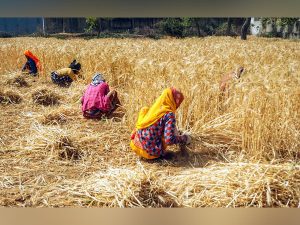 The thrust of the government on women empowerment continues, with a new scheme for girls from economically weaker sections of the society who will receive Rs 1 lakh after graduation, with an initial grant of Rs 20000. This is a continuum of the Mission Shakti Program unveiled by Naveen babu in 2001, which benefits nearly 70 lakh members of SHG to provide financial assistance, bank linkage and training to foster economic independence & livelihood activities. The Mohan Majhi government has launched the Subhadra scheme in 2024 to empower women in the age group of 21-60 with Rs 10000 transferred every year.
Four new universities will be opened. Skill has been a thrust area for the BJP government, with allocation increasing from Rs 986 Cr in 2023-24 to Rs 1583 Cr next year to Rs 1784 Cr for 2026-27. This will include upgradation of IITs.  The allocation of Rs 1000 Cr for unconnected habitats and completion of water supply projects are welcome initiatives. The proposal to make Puri, a hub for global tourism and religious culture, with an allocation of Rs 1000 Cr is likely to be a political bonanza, with BJP’s evangelical zeal to bolster Hindu card by promoting the Jaganath cult.
The Missing Links
The thrust on education, skilling, connectivity and support for higher education of girls is welcome. Similarly, the thrust on flood control and rural development is timely, as also handsome allocation to capital and development expenditure. However, the dependence on high borrowing is wearisome, as revenue receipts will increase by only 7%. Land revenue contributes only 1.5% of revenue collected by the state; there is room for improvement in collection by raising antiquated rates.
 Human development & woman empowerment, which were the twin trump cards of Naveen Babu, are serious areas of concern, with unacceptable levels of stunting among children, very high MMR, distressing anaemia levels among adolescent girls, low quality education. It is a testimony to the lack of priority that BJP assigns to capability development, ascompared to promoting corporate and business interests. It also reflects weak accountability of the bureaucracy.
The most disconcerting area is, however, the expectation that Odisha will attract Rs 30 lakh Cr in the next 15-20 years through the PPP route, for making Odisha a major manufacturing hub. The experience shows that in India the share of private sector in PPP is around 20% The expectation that in Odisha 75% funding will come from the private sector looks a very unrealistic.
The other disturbing trend is that growth centres will continue to be in Bhubaneswar Cuttack Paradeep and Puri, leaving vast swathes of undeveloped pockets in tribal districts and districts outside the privileged quartet. In Centre Periphery theory, Gunnar Myrdal & Raul Prebisch brought out the perils of such imbalanced development. Odisha in the BJP dispensation seem to have fallen in to that trap of imbalanced development, where few cities will flourish and villages languish in terms education, health care, nutrition and access to latest technology.



Leave a Reply
Be the First to Comment!