
 Professor Satya Narayan Misra* in Bhubaneswar, December 11. 2025: With the 250th anniversary of the magnum opus The Wealth of Nations fast approaching; the world is gearing up to honour the Scottish economist, Adam Smith. But which Smith should be recognised? The hardnosed founder father of modern economics who wrote “The Wealth of Nations” in 1776 or the philosopher who wrote “The Theory of Moral Sentiments” in 1759?
Scholars have wrestled with this question, a riddle known as “Das Adam Smith Problem” for centuries, because it concerns not just dualities within Smith’s thought, but also our uneasy relationship with morality and markets. The problem was first formulated in late 19th century Germany, where economists of the historical school, saw a glaring contradiction between the compassionate, sympathy driven moral psychology of Smith’s first book and self-interested calculus of the second; where he famously observes:”
It is not from the benevolence of the butcher, the baker, the brewer, that we expect our dinner, but from their regard to their own interest”. To William Hasbach and August Oncken , the sentimental Scot was irreconcilable with the architect of capitalism of 1776. The Das Adam Smith Problem This contradiction suited the intellectual temper of the time. As industrial capitalism took hold, with mechanization of production through innovations like steam engine and textile machinery, economics was busily reinventing itself as a ’science’, while philosophy and theology were left to fret over the moral wreckage. Lord Byron in his poem Darkness (1816) wrote “A sickly, saffron glow, shone dimly through the fog”.
Das Adam Smith problem thus became a projection of modernity’s own split personality: one half was absorbed by efficiency and the other by conscience. For Karl Marx, industrial capitalism epitomised widespread exploitation of labour in the grand pursuit of wealth. Equity became his main theme song, trumping efficiency. The Chicago School However, Jacob Viner, a founder of the Chicago School of Economics in the 1920s, showed that the two books shared a philosophical spine. For them, the ‘invisible hand ‘was never meant an ode to greed; it was a metaphor for the way that social benefits can arise from individual human motives, provided that institutions channel them appropriately.
As Smith’s contemporary and friend David Hume observed, the scaffolding of social order rests on a blend f self-love and sympathy. Smith’s own answer to the human predicament was not to abolish self-interest but to channel it through habits of virtue, civic trust and the judgement of an imagined ‘impartial inspector’. Markets in this vision were not moral vacuums but extension of moral life. In the 20th century, as models grew more mathematical, the ’economic man’ was stripped of sentiment and moral underpinning.
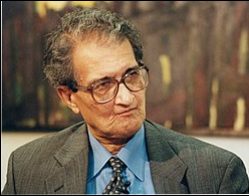 Amartya Sen’s Contention: It was the Nobel laureate economist Amartya Sen who brought the original debate back to the fore. “The so called Adam Smith problem, he wrote, is ‘largely of our own making’. Smith’s idea of self-interest was never naked greed, but a sentiment woven in to the fabric of social life –one disciplined by prudence, justice, and benevolence. Recent scholarship has added to this insight. The Harvard economic historian Emma Rothschild shows that the division between the moral and the economic is a historical artefact –one that we need to urgently dispense with. Smith’s answer was neither state socialism nor unbridled markets, but something subtler: a moral economy grounded in sympathy and the pursuit of human flourishing.
Fissure Between Morality &Markets From the 2008 financial crisis in the USA with contagion effect on several countries, Nobel laureates like Joseph Stiglitz argue that central gravamen of Smith that ‘private pursuit of self-interest would lead .as if by an invisible hand, to the well-being of all has proved to be unfounded. As Stiglitz observes in his book “The Price of Inequality” (2012) that ‘it led to the banker’s well-being, with the rest of society bearing the cost’. Markets by themselves often fail to produce efficient and desirable outcomes, and there is a role for the government in correcting these market failures by designing policies (taxes and regulations) that bring private incentives and social returns in to alignment.
It was Hayek, an acolyte of Smith, in his book “Road to Serfdom” (1944) strongly critiqued central planning in USSR and strongly advocated for unbridled markets. In a stinging riposte , Stiglitz argues in his book ‘Road to Freedom’ that unregulated markets prioritize the freedom of corporations and wealthy over individuals, leading to rising inequality and social injustice. Smith’s Take It would be difficult to visualise how Smith would have responded to the 2008 financial crisis, the way Stiglitz has critiqued him . For Keynes, his successor to the throne of modern economics, the financial crisis of the thirties clearly found a serious fault line in the supposition that markets will self-correct in the event of disequilibrium.
But Keynes did not take on Smith on the invisible hand of the market while advocating for public investment in the event of an economic depression. A sober reading of both the seminal works of Smith would seem to show that he stands closer to Aristotle’s virtue ethics than to the mechanistic utilitarianism attributed to him. We seem to fail to recognise that his two work are complementary in nature. By solving the Das Adam Smith Problem, we would close the rift between efficiency and empathy. A dialogue between morality and markets is both riveting and ennobling.
Smith flagged the undercurrents; the dialogue will continue. The economic battle of the twentieth century was between capitalism and communism. With the disintegration of USSR in 1991and fall of the Berlin Wall in 1989, Francis Fukuyama hurriedly proclaimed the triumph of capitalism. The economic crisis of 2008 has rightly brought out the innards of market fundamentalism, importance of regulation, containment of greed, by the visible hand of the government. Smith must be commended for trying balancing self-interest with moral principles in his two significant work.
*Professor Misra teaches economics in reputed universities



Leave a Reply
Be the First to Comment!